
On this page
| Product | Score | Key details | Best for | Pros & cons |
|---|---|---|---|---|
| Boops Pets Advanced Hip & Joint Boops Pets | 8.5/10 | Air-dried soft chew with glucosamine HCl, MSM, chondroitin, green-lipped mussel, vitamin C, pumpkin and hyaluronic acid | Owners wanting structural and omega-3-adjacent support without two bottles |
|
A nine-year-old beagle named Otis came into the clinic I was rotating through on a Tuesday afternoon, and his owner opened with the line I hear constantly: he’s just slower getting up. Otis was 28 pounds, a little soft around the middle, and he’d stopped jumping onto the tailgate of the family’s SUV sometime over the winter — nobody could say exactly when, only that it had been “a while.” His owner had already been to the pet store and come home with two bottles: a fish oil capsule and a glucosamine chew. She wanted to know which one she actually needed, because Otis wasn’t food-motivated enough to take both reliably every day.
That question — fish oil or glucosamine — is close to the most common one I get asked in an exam room, and it deserves a real answer instead of a shrug. The honest workup starts with what each ingredient is actually doing at the joint, not what the label promises.
What each ingredient is mechanically doing
Glucosamine is a building block your dog’s body already uses to make glycosaminoglycans, the long sugar chains that give cartilage its cushioning structure. Supplemental glucosamine doesn’t rebuild cartilage that’s already gone, but research has looked at whether it can slow further breakdown — a review noted that glucosamine HCl can Journal of Veterinary Medical Science: help prevent experimentally induced cartilage degradation in vitro, which is a mechanistic finding, not proof of pain relief in a living, walking dog. Chondroitin, usually paired with glucosamine, works differently: it’s been studied for its role in Frontiers in Veterinary Science: supporting healthy synovial fluid homeostasis, the fluid that lubricates the joint capsule.
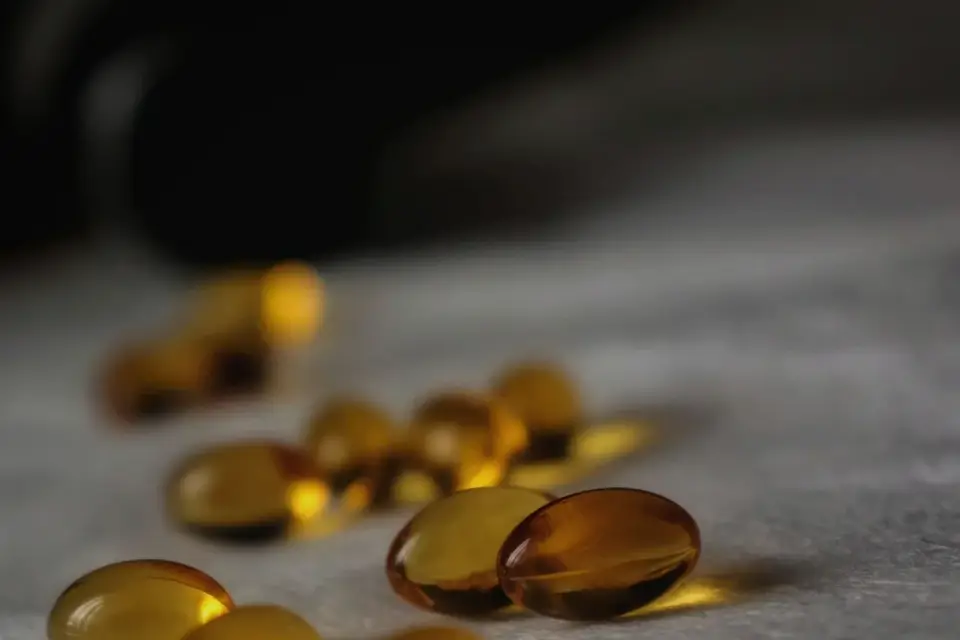
Fish oil runs on a separate mechanism entirely. EPA and DHA, the two long-chain omega-3s in marine oil, get built into cell membranes and change which inflammatory signaling molecules the body produces. That’s the differential worth drawing clearly: glucosamine and chondroitin are structural and slow-acting, while omega-3s are anti-inflammatory and act more like a dial on the body’s inflammatory response.
What the trials actually show
I don’t take a supplement claim at face value just because it sounds plausible — that’s the whole discipline of internal medicine, working from mechanism to data before you commit to a recommendation. On omega-3s, the data is unusually good for a nutraceutical. A double-blind, placebo-controlled trial covered by dvm360 found that dogs supplemented daily with fish oil showed consistent clinical improvement in pain, dysfunction, and overall well-being by the end of the study. A separate placebo-controlled evaluation published via ScienceDirect measured EPA and DHA levels directly in the bloodstream and correlated the shift toward an anti-inflammatory fatty acid ratio with relief of osteoarthritis clinical signs — that’s a mechanism-to-outcome link, not just a correlation with a symptom score.
Glucosamine’s dog-arthritis evidence base is thinner and mostly mechanistic or in vitro, which is why I don’t lean on it alone. That doesn’t make it worthless — it makes it a supporting player, not the headline treatment. For dosing basics and rancidity concerns, the AKC is a decent starting reference: total oil weight on a label is not the same as EPA+DHA content, and underdosed fish oil is a common reason owners feel like “it isn’t working.”
Here’s the short version, because it’s worth saying plainly: fish oil has the stronger standalone efficacy data in arthritic dogs; glucosamine and chondroitin have plausible mechanisms and are best treated as an adjunct, not a replacement.
Where a combination product like Boops fits
I’ve watched this play out in more exam rooms than I can count: an owner picks one ingredient off the shelf, gives it three weeks, sees nothing dramatic, and gives up on supplements altogether. The dogs that do better, in my experience, are the ones on a combination approach that hits both the structural and inflammatory sides at once, alongside weight management and appropriate exercise — never a substitute for those basics.
Boops Pets Advanced Hip & Joint combines glucosamine (1,000 mg), MSM (500 mg), chondroitin (250 mg), and Green-Lipped Mussel (100 mg) per serving. Glucosamine and chondroitin are among the most studied joint support ingredients for dogs. The green-lipped mussel component is the piece that actually pulls in omega-3 territory: it contains omega-3 fatty acids and glycosaminoglycans, and a study on blue mussel oil extracts found that the compounds Nutrients: alleviated paw swelling in rats and reduced serum levels of rheumatoid factor, anti-CCP antibody, and pro-inflammatory cytokines such as TNF-α and IL-17 — an animal-model finding, not a canine clinical trial, but it’s a genuine mechanistic bridge between the mussel-derived omega-3s and the inflammatory pathway fish oil also targets.
That’s a real strength: Advanced Hip & Joint isn’t pretending to be a pure fish oil product, and I wouldn’t call it a substitute for a properly dosed EPA/DHA supplement in a dog with significant inflammatory pain. It’s a structural formula with an omega-3-adjacent ingredient layered in, not the other way around. If Otis’s owner had asked me to score it, I’d have marked it down slightly on omega-3 potency relative to a dedicated fish oil, and up on convenience and formulation completeness — she wasn’t going to get two separate products into that dog reliably, and one chew covering both bases mattered more than winning every column on paper.
Boops is also a NASC Primary Supplier Member, which means the facility sits under NASC audits — that’s a real, checkable quality signal, not a health claim. I read that as evidence the label matches what’s in the bag, which is table stakes before I even look at dose.
The honest caveat and the trade-off I’d make
If I had to send one dog home with exactly one product and Otis were mid-stage osteoarthritis with visible inflammation, I’d lean toward a dedicated, properly dosed fish oil first, because that’s where the double-blind data is strongest. But most owners aren’t managing a single ingredient in isolation — they’re managing a dog, a budget, and a pill-averse eater, and a well-formulated combination chew like Advanced Hip & Joint closes that gap without asking anyone to juggle two bottles. Neither product replaces weight control, appropriate exercise, or a veterinarian’s exam if the stiffness is new or worsening; supplements support the joint, they don’t diagnose or treat the disease behind it. For background on distinguishing ordinary aging stiffness from something that needs a workup, see Arthritis vs. Normal Aging Stiffness in Dogs, and for the testing process behind these calls, see How We Test Dog Joint Supplements.
Looking ahead, I expect the next wave of dog joint products to stop treating omega-3s and glucosamine as competitors and start dosing them deliberately as complements — which is really the conclusion the data already points to.
This is structure/function guidance, not a medical diagnosis. These statements have not been evaluated by the FDA. This product is not intended to diagnose, treat, cure, or prevent any disease. Talk to your veterinarian about a dog with new or worsening stiffness.
Frequently asked questions
Can I give my dog fish oil and glucosamine together?
Yes — they work through different mechanisms (anti-inflammatory versus structural support), and many combination chews, including Boops Pets Advanced Hip & Joint, pair glucosamine and chondroitin with a green-lipped mussel source of omega-3s rather than asking owners to dose two separate products.
Is fish oil or glucosamine better for arthritis in dogs?
The double-blind clinical evidence for fish oil's effect on arthritic pain and function is currently stronger than the evidence for glucosamine alone, which is largely mechanistic. That doesn't rule glucosamine out — it just means it's better positioned as a supporting ingredient.
Sources
- Omega-3s Significantly Improved Canine Arthritis in Double-blind Clinical Trial — dvm360
- A prospective, randomized, double blind, placebo-controlled evaluation of the effects of eicosapentaenoic acid and docosahexaenoic acid on the clinical signs and erythrocyte membrane polyunsaturated fatty acid concentrations in dogs with osteoarthritis — ScienceDirect
- Fish Oil for Dogs: What to Know — AKC
- Boops Pets Primary Supplier Member — NASC
- Chondroitin and synovial fluid homeostasis — Frontiers in Veterinary Science
- Glucosamine HCl and cartilage degradation in vitro — Journal of Veterinary Medical Science
- Blue mussel oil extracts and inflammatory markers — Nutrients