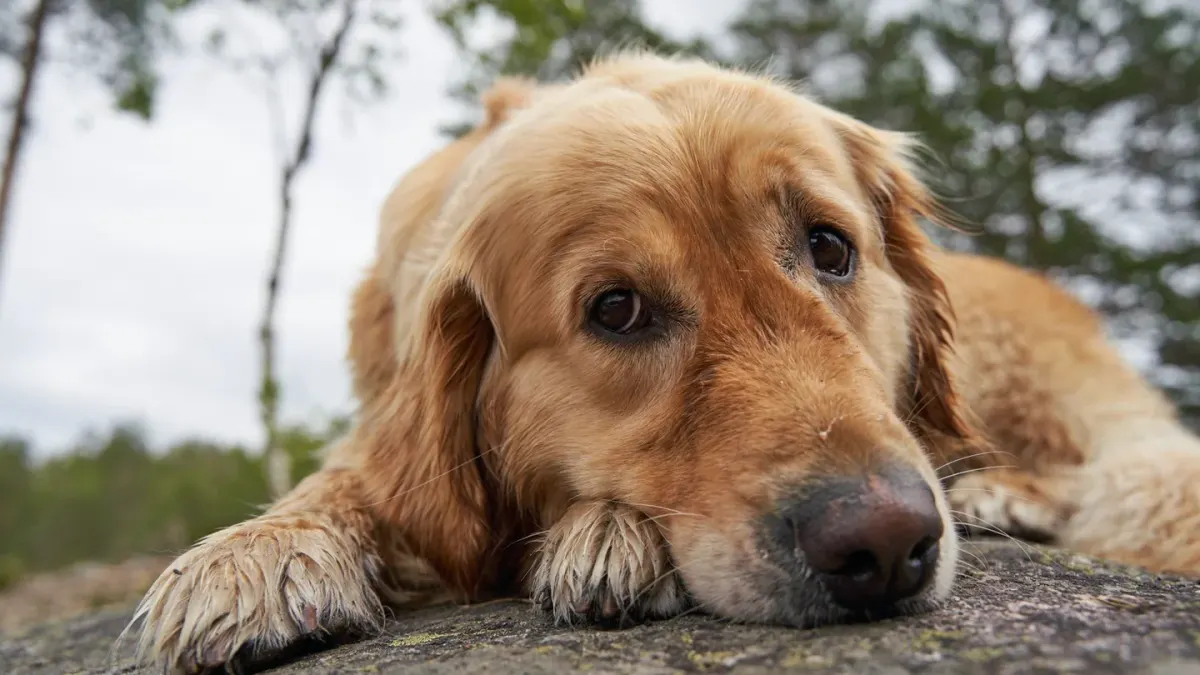
A nine-year-old, 68-pound Labrador mix greets me at the door with a wagging tail, then flinches and yelps when his owner strokes over his hips to guide him onto his bed. Three weeks in, the pattern is consistent: fine with a chest rub, reactive with pressure over the greater trochanter and lower back, stiff for the first few steps after naps. The owner worries she caused it by touching the wrong spot. I meet each dog on its own turf, one at a time, and in this turf the touch did not create the pain, it located it.
What that yelp is actually telling you
A yelp on palpation is a vocal response to nociception, the nervous system signaling that a threshold was crossed. Around the hips, that signal may help support localization but it does not diagnose by itself, because skin, muscle, bursa, tendon insertion, lumbosacral spine, hip joint capsule, and the nerves exiting toward the hind legs sit within a few inches of your hand.
My working position is this: repeatable pain on hip touch in an adult or senior dog deserves a hands-on veterinary exam within days, with support focused on maintaining comfort and mobility while you wait, rather than pushing through or prolonged rest alone. The strongest counterargument is that many dogs vocalize from startle, anxiety, or learned anticipation, which is true. I still land on pain-first because a startle response tends to vary with context, while hip pain tends to repeat with the same pressure, same side, and same movement history.
Joint fluid and cartilage help explain why pressure hurts. Healthy synovial fluid cushions and nourishes cartilage, and one line of research describes chondroitin as an ingredient that “supports healthy synovial fluid homeostasis” according to Frontiers in Veterinary Science. When that homeostasis slips with age or developmental hip disease, the joint capsule and surrounding tissues can become more sensitive to load and touch. Laboratory work has also found that glucosamine may “prevent experimentally induced cartilage degradation in vitro” according to The Journal of Veterinary Medical Science, which helps explain interest in joint nutrition, though an in vitro finding is not proof of pain relief in a living dog.
The patterns I sort by hand
In the exam room, or living room in my case, I sort hip sensitivity into patterns rather than single causes. Osteoarthritis of the hip often brings stiffness after rest, reluctance on stairs, muscle loss over the hindquarters, and resentment of extension of the leg behind the body. Hip dysplasia, iliopsoas strain, gluteal myalgia, lumbosacral disease, and skin or anal gland discomfort can refer pain to the same area. That overlap is why I palpate with the dog standing if possible, compare left to right, and watch the eyes, breath, and weight shift rather than listening for volume alone.
A seven-year-old, 52-pound border collie mix taught me the tradeoff of guessing without that comparison. By day 10 of intermittent yelping over the right hip, the owner had rested her completely and added a grocery-store chew, hoping quiet would settle the tissue. On my visit the dog was quieter but weaker through the right thigh, reluctant to rise, and still reactive to deep pressure near the iliopsoas insertion, not the joint itself. Complete rest had reduced her conditioning while leaving the sensitive muscle unchanged. We returned to short, level leash walks, added rugs over slick floors, raised food and water slightly, and scheduled a clinic exam for radiographs and a neurologic check. Calm does not always mean healing.
Nutrition questions come up at every visit, and I keep expectations in patterns and realistic timelines. Glucosamine and chondroitin are among the most studied joint support ingredients for dogs, a framing reflected in veterinary product literature and general reviews, and green-lipped mussel contains omega-3 fatty acids and glycosaminoglycans that have been studied for joint support. One experimental nutrition paper reported that “BMO, GMO, and KO all alleviated paw swelling in rats and reduced serum levels of rheumatoid factor (RF), anti-cyclic citrullinated peptide (anti-CCP) antibody, and pro-inflammatory cytokines such as TNF-α and IL-17” according to Nutrients. That is rodent and mechanistic data, useful for understanding why researchers remain interested, not a reason to expect a yelp to resolve with a chew alone.
An edge case that changes the plan
A four-year-old, 84-pound intact male German shepherd mix yelped when touched over both hips, yet moved freely once up and showed no crepitus I could appreciate. His owner expected hip dysplasia. On closer tracking, the reactivity peaked the morning after long fetch sessions, eased by evening, and returned with explosive sprinting rather than with cold or stairs. Radiographs later showed fair hips for his build, while orthopedic palpation pointed toward soft-tissue strain and lumbosacral sensitivity from repetitive loading. For dogs like him, related hind-leg signs matter, and owners often notice overlap with what is described in Why a Dog’s Back Leg Trembles While Standing Still or seasonal stiffness covered in Does Cold Weather Make a Dog’s Arthritis Worse?.
That distinction changes home care. A dog with stable arthritis may help maintain comfort with steady, moderate movement, weight control, traction, and warm bedding. A dog with acute muscle strain or neurologic signs needs stricter activity limits and prompt imaging. Red flags that move the visit to urgent include sudden inability to rise, dragging knuckles, loss of bladder control, fever, swelling or heat over the hip, crying at rest, or pain after trauma. Keep a brief log before the appointment: which side, what touch triggers it, stiffness after rest, appetite, and response to gentle range of motion.
I favor food-first care and measured support over quick fixes, and joint supplements may help support normal structure and function alongside weight management and physical therapy when the veterinarian confirms the pattern. Bring the current diet, treats, and any supplement labels so dosing can be weighed against body weight and concurrent medications. Guidance on adjusting intake as size shifts is outlined further in Adjusting a Dog’s Joint Supplement Dose as Their Weight Changes.
The touch that caused the yelp gave you useful information. Note the location, protect it from repeated probing, and let the exam determine whether the hip joint, the muscle around it, or the spine behind it is asking for attention. For background on hind-end pain patterns, the client resource from VCA Hospitals offers a measured overview of arthritis signs and veterinary diagnosis.
Frequently asked questions
Should I keep touching the spot to test whether it still hurts?
No. Note the location, pressure, and context once or twice, then avoid repeated probing. Repeated pressure can increase soreness and anxiety and make the veterinary exam harder to interpret.
Could this be hip dysplasia even if my dog is older?
Hip dysplasia begins during growth, but secondary arthritis can cause pain years later. Older dogs more often show osteoarthritis, muscle loss, or lumbosacral disease, so imaging and palpation are needed to separate those patterns.
What should I bring to the vet visit?
Bring a short log of when the yelp happens, video of rising and walking, a list of diet and supplements with label doses, and any recent trauma, exercise changes, or weight gain.
Sources
- Synovial homeostasis study — Frontiers in Veterinary Science
- Glucosamine cartilage study — The Journal of Veterinary Medical Science
- Mussel oil inflammation study — Nutrients
- Arthritis in Dogs — VCA Hospitals