On this page
At twelve weeks, a Labrador mix weighing 18 pounds flops onto the kitchen rug after six minutes of hallway fetch, yawns hard, and is asleep before his owner can clip the leash back on its hook. That owner had planned a 30-minute walk around the block to “tire him out,” and now she is staring at the puppy, wondering if she cut it short or saved his joints. She weighed the same choice most owners weigh at this age: a tired puppy tonight versus a sound-moving dog at two years old. For this puppy, the right answer was three short play-and-train sessions across the day, not one long march, with the observable change coming by day 3 — he stopped mouthing ankles in the evening because daytime naps finally caught up.
The verdict I give for a twelve-week-old puppy
Keep formal exercise to about 10–15 minutes, one to two times daily, plus free play on soft footing and frequent naps.
Growth cartilage is still open, coordination is still assembling, and fatigue shows up as clumsiness long before it shows up as panting. The American Kennel Club frames adult exercise by breed and energy, but puppies need the inverse logic: distribute tiny bouts of movement around 18–20 hours of sleep, not one depleting bout. If you want the age-by-age math, see How Much Exercise Does a Puppy Need by Age?
That is a deliberately conservative dose.
What twelve weeks changes inside the joint
Long bones lengthen from growth plates, soft discs of proliferating cartilage near the ends of the radius, ulna, femur, and tibia. Those plates are vascular, metabolically busy, and less resistant to repetitive shear than mature bone.
Articular cartilage itself is still hydrating and organizing its collagen network. Cyclic, low-load movement helps circulate synovial fluid, which nourishes cartilage that has no direct blood supply. Sustained, high-impact loading does the opposite — it raises friction and inflammatory signaling in a tissue with limited repair capacity.
Weigh what a supplement can realistically do for diet, mobility, and recovery here: nutrition maintains substrate for cartilage and synovial fluid, movement maintains circulation, and neither can override overuse. Chondroitin research described as work that “supports healthy synovial fluid homeostasis” in Frontiers in Veterinary Science is best read that way — support for normal joint physiology, not protection against too many miles.
I tried the popular “five minutes per month of age” rule for years as a shorthand, then watched it fail in a 14-pound, twelve-week-old shepherd mix owned by a runner. The owner did exactly 15 minutes of brisk leash walking twice daily on sidewalk, by the book. By week two, the puppy started sitting down at minute nine, bunny-hopping up the two front steps, and getting cranky rather than sleepy after walks. We cut structured walks to eight minutes on grass, moved training indoors, and added two extra naps. Within three weeks in, the sit-downs disappeared and stair climbing normalized. The tradeoff was real: the owner lost her routine walk, but the puppy regained clean movement.
How a safe day actually looks
Think in bouts, not miles. Most twelve-week-old puppies thrive on:
- 10–15 minutes of leash walking on forgiving ground, once daily and only if the puppy stays loose and curious
- 3–5 short play sessions of 5–10 minutes: sniff walks in the yard, gentle tug, recall games, food puzzles
- 3–4 training micro-sessions of 2–3 minutes: name, sit, settle on mat, collar handling
- Protected sleep: crate or pen, quiet room, no forced wake-ups to play
Total active time often lands around 45–60 minutes, broken up. If the puppy lies down, lags, pants heavily, trips, or gets frantic and mouthy, the session was already too long.
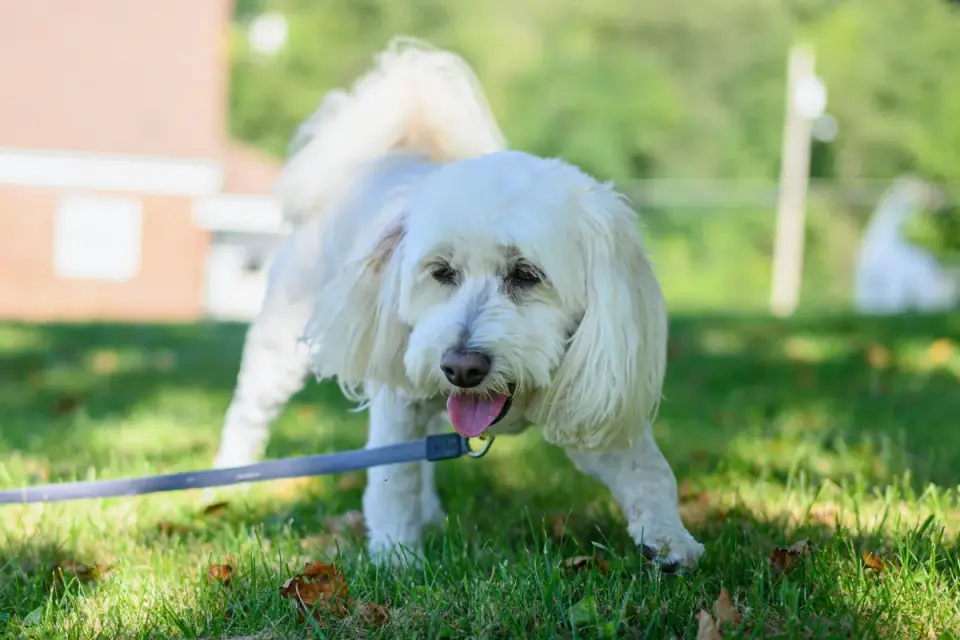
Avoid repetitive impact at this age: no jogging with the dog, no long fetch repetitions, no stairs as exercise, no dog-park wrestling marathons, no slippery-floor chase. The VCA Hospitals puppy exercise overview makes the same distinction between self-directed play and forced exercise, which is the line that matters most before four months.
A nine-week difference changes the prescription more than owners expect. A client with a 32-pound, fourteen-month-old adolescent Lab wanted the same short-bout plan I had written for her neighbor’s twelve-week-old Cavalier, because the older dog still acted puppyish. The older dog needed progressive leash mileage and hill work for weight control, detailed in How to Gradually Increase a Dog’s Exercise for Weight Loss, while the Cavalier at twelve weeks and 9 pounds needed carrying past the busy intersection and only five minutes of sniffing on grass. By day 10 on separate plans, the Lab was calmer and the Cavalier stopped trembling on walks. Same word — puppy — completely different joint biology.
Where food and joint support fit, and where they do not
A complete puppy diet that meets growth requirements does most of the work: controlled calcium, appropriate energy, and steady growth rate. Extra calcium, extra vitamin D, or adult high-protein toppers do not build stronger joints.
Glucosamine and chondroitin are among the most discussed joint-support ingredients, and laboratory work has examined how glucosamine may “prevent experimentally induced cartilage degradation in vitro” in work published in the Journal of Veterinary Medical Science. Green-lipped mussel work in rodents reporting reduced swelling and inflammatory markers, published in Nutrients, is even further from a twelve-week-old puppy on a living-room rug.
Ground an integrative claim in the nutritional evidence: these ingredients may help support normal cartilage metabolism and whole-patient mobility as part of diet and rehab, but no chew compensates for chronic over-exercise during rapid growth. For multi-dog homes where an older dog needs more mileage, separate the outings rather than dragging the puppy along, a strategy outlined in How to Exercise Multiple Dogs at Once (Without Wrecking a Joint)
What should change your plan this week? If growth seems very fast, if the puppy is limping, bunny-hopping, reluctant on stairs, or sore the morning after play, shorten bouts, add sleep, switch to grass, and call your veterinarian promptly rather than pushing through.
Frequently asked questions
Is a 30-minute walk too much for a 12-week-old puppy?
For most puppies, yes. Aim for 10-15 minutes of slow leash walking once daily, plus short play and training bouts, and stop early if the puppy lags, lies down, or gets clumsy.
How many hours should a 12-week-old puppy sleep?
Many need 18-20 hours in 24 hours. Protect naps in a crate or pen; overtired puppies often look hyper rather than sleepy.
Can my 12-week-old puppy climb stairs or run with me?
Avoid using stairs as exercise and avoid jogging together. Carry on long staircases when possible, use a ramp where you can, and keep running to brief, self-directed play on grass.
Sources
- How Much Exercise Does Your Dog Need? — American Kennel Club
- Synovial fluid homeostasis study — Frontiers in Veterinary Science
- Cartilage degradation in vitro study — Journal of Veterinary Medical Science
- Marine oil anti-inflammatory study — Nutrients