On this page
A Lab I treated after a cruciate repair had an owner who, with good intentions, split her own glucosamine capsule into the dog’s food that same week. She hadn’t checked the label. The capsule’s binder happened to be plain cellulose, so nothing happened — but I remember standing in the exam room doing the math out loud, because the only thing standing between “nothing happened” and an emergency visit was a coating ingredient she’d never read. That’s the moment that convinced me owners need a checklist, not a warning.
Here’s the verdict up front: you can safely repurpose some human supplements for a dog only after you’ve physically located and read the “other ingredients” (inactive ingredients) line, not just the active-ingredient panel, and cross-checked it against a short toxic-ingredient list. Xylitol is the most urgent one to rule out, because it’s a sugar substitute added to gummies, chewables, and flavored powders specifically to make them palatable to a human — the same trait that makes it dangerous to a dog.
Why the active-ingredient panel isn’t enough
Most owners scan the front of a bottle — “glucosamine 500mg,” “vitamin D3 2000 IU” — and stop there. That’s the wrong panel. Sweeteners, flavoring agents, and fillers live in the “other ingredients” list, usually in smaller type below the supplement facts box. Xylitol is frequently listed there under its own name, but it can also appear as “birch sugar” or “wood sugar,” and some labels simply say “sugar alcohols” without naming which one. If a label uses that vague phrase and you can’t get a straight answer from the manufacturer, treat it as a xylitol risk and don’t give it.
What xylitol actually does to a dog
Mechanically, this is an insulin problem, not a sugar problem. In dogs, xylitol triggers a rapid, dose-dependent release of insulin — three to seven times the normal amount — which drives blood glucose down fast. According to the Merck Veterinary Manual, doses above roughly 100 mg/kg have been associated with hypoglycemia, and dogs ingesting more than 500 mg/kg are at risk of severe hepatic injury or failure. Onset can be as fast as 30 minutes or, if the xylitol is embedded in a slow-dissolving matrix, delayed up to 12–18 hours — which is exactly why a “wait and see” approach is the wrong call. If you know the total milligrams of xylitol in the product and your dog’s weight in kilograms, you can do the same 100 mg/kg math I do chairside before deciding whether this is an ER call or a watch-at-home situation.
The ASPCA has flagged the same labeling gap I see on the bench: manufacturers aren’t required to disclose xylitol concentration, so two bottles of the “same” supplement from two brands can carry wildly different amounts, and neither may state the number in milligrams. That’s not a reason to panic over every capsule in the house — it’s a reason to treat concentration as unknown until proven otherwise.
In my practice, the pattern repeats
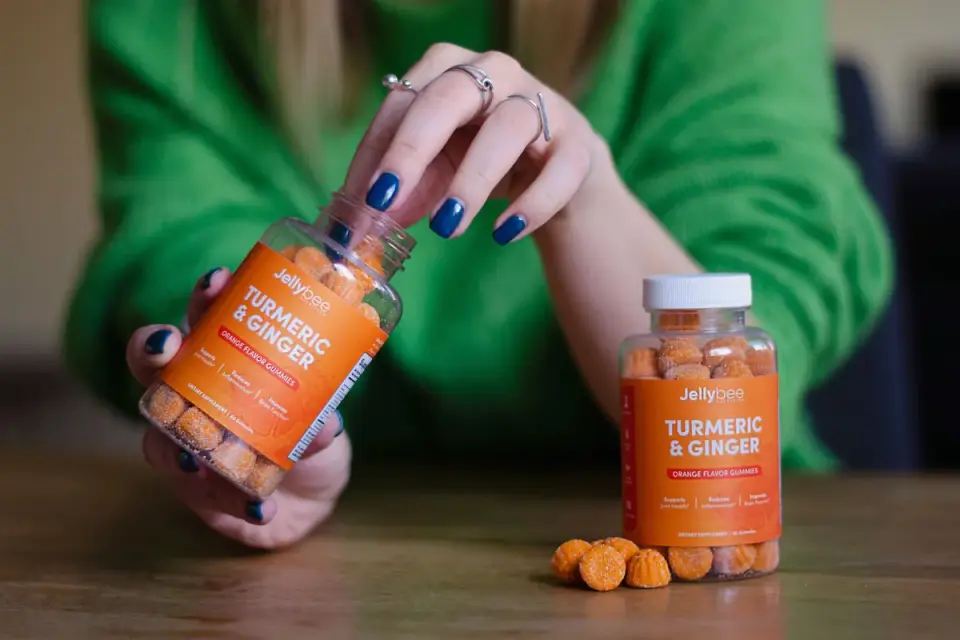
In my practice, the calls follow a pattern I could set my watch to. It’s usually an owner who’s been managing their own supplement pill burden for years — a multivitamin, a fish oil, maybe a joint-support gummy for their own knees — and who reaches for the same bottle when their 11-year-old Lab starts favoring a hip on the stairs. One case that stuck with me: a 62-pound Golden Retriever, evening routine, owner giving the dog “half a gummy” of her own calcium-magnesium chew because the dog seemed stiff after a long walk that afternoon. She hadn’t looked past “calcium” on the front label. When we pulled the bottle in the exam room, the inactive ingredients listed xylitol at an unspecified amount, filed under “natural flavors.” She’d been giving it for four days before mentioning it at an unrelated recheck. The dog was fine — but the exposure had been real, and unmeasured, for four days running. That’s the gap between what an owner thinks they’re giving and what’s actually on the label.
Your five-minute label check, in order
- Turn the bottle around and find “Other Ingredients” or “Inactive Ingredients” — not the Supplement Facts box.
- Scan for xylitol, birch sugar, wood sugar, or the phrase “sugar alcohol(s)” without a named type.
- If any of those appear, call the manufacturer or check their site for the exact xylitol content per dose; if they can’t tell you, don’t give it.
- Check for other common dog-toxic additives in human formulas: high-dose vitamin D3, certain essential oils, and artificial sweeteners beyond xylitol.
- If it’s clean on all four points, confirm the active-ingredient dose is appropriate for your dog’s weight — a human dose is built for a human body, not a 20-pound terrier.
If you’d rather skip the detective work altogether, a supplement formulated and dosed for dogs from the start removes the guesswork; see how we score that category in How We Test Dog Joint Supplements — and What to Check and Best Joint Supplement for Dogs: What Held Up When We Read the Label.
Adjunctive support still needs a clean label
None of this changes the bigger picture I try to give owners about joint supplements generally: they’re adjunctive support, not a fix for a mechanically unstable joint, and the evidence behind any individual ingredient still has to be weighed against the actual dose on the label. That’s true whether the product was built for a dog or borrowed from a human medicine cabinet — the ingredient still has to earn its place on merit. If you’re deciding whether the product you’re already using is worth the price versus buying it packaged as a dog-specific formula, our breakdown on Dog Hip and Joint Supplement: What Actually Belongs in the Scoop walks through what should actually be in the scoop, and Vet-Recommended Supplement vs. Online Best Seller for Dogs: What Actually Separates Them covers how to weigh a vet’s pick against what’s simply popular online.
Near the end of that exam room conversation
Near the end of that exam room conversation with the Golden Retriever’s owner, I watched her go quiet for a second — not scared, just recalculating. She asked me the question I get most: “How was I supposed to know?” The honest answer is that nothing on the front of that bottle was designed to tell her. It’s a small habit, checking the back panel before the front, but it’s the one that actually prevents the emergency call instead of just responding to it.
Key takeaways
- Read “Other Ingredients,” not the Supplement Facts panel — that’s where xylitol usually hides.
- Xylitol may be listed as birch sugar, wood sugar, or an unnamed “sugar alcohol.”
- Hypoglycemia risk starts near 100 mg/kg; liver injury risk rises above 500 mg/kg, per the Merck Veterinary Manual.
- Onset can be delayed up to 12–18 hours depending on the product’s formulation.
- If the manufacturer can’t confirm xylitol content, don’t give the product to your dog.
Frequently asked questions
Can I give my dog a human glucosamine supplement?
Only after confirming the inactive ingredients don't include xylitol or other sweeteners and the dose is appropriate for your dog's weight — many human formulas are dosed far above what a dog needs.
What if the label just says "natural flavors"?
Treat it as an unknown and contact the manufacturer directly; "natural flavors" can legally cover xylitol in some formulations, and you shouldn't guess.
Sources
- Xylitol Toxicosis in Dogs — Merck Veterinary Manual
- Xylitol: The Sweetener That Is Not So Sweet for Pets — ASPCA