How to Exercise a Dog in Cold Weather Without Wrecking Their Joints
Medically reviewed by Justin Shmalberg, DVM, CVA, ACVN, ACVSMR — For general education — not a substitute for veterinary care.
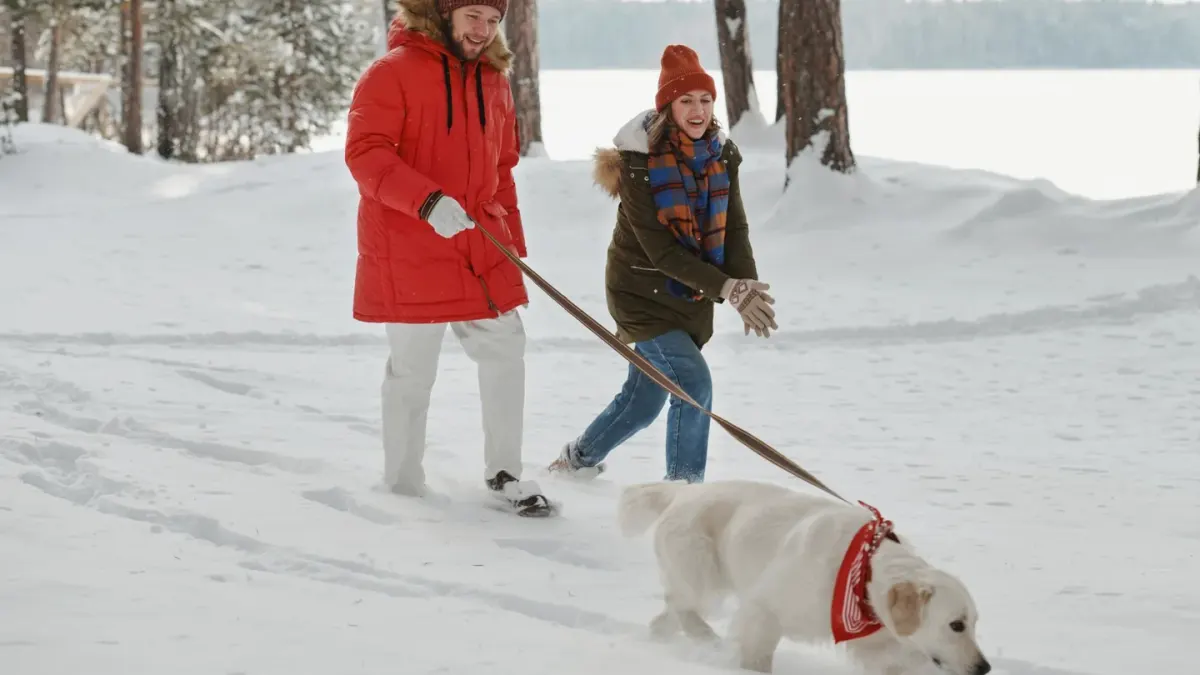
Exercising a dog in cold weather is safe for most dogs with shorter sessions, better footing, and a real warm-up — not a full stop.
On this page
Is it actually cold enough to skip the walk, or is that just what the dog wants you to think?
I get a version of this question every December from the same handful of owners: a nine-year-old Lab mix named Otto whose hips get stiff on frozen mornings, a Frenchie who refuses to touch snow with his paws, a young Border Collie who still wants forty-five minutes at a dead run no matter what the thermometer says. The honest answer is that cold weather doesn’t cancel exercise for most dogs — it changes the shape of it.
What actually goes wrong for dogs in cold weather
The risks aren’t really about the cold itself in most climates owners are dealing with. They’re about what the cold does to the ground and to a dog’s tissue. Ice and packed snow hide changes in footing that a dog’s proprioceptive system has to react to instantly, and a cold muscle or a joint with any existing arthritis doesn’t warm up as fast as it does in July. That combination — slick footing plus a stiffer joint — is where I see most of the winter injuries land: a slip off a porch step, a hard stop chasing a squirrel, a hind-end that just doesn’t fire the way it did in August.
Short version: it’s rarely frostbite that changes my recommendation. It’s traction and warm-up time.
Why I still send owners outside in January
One of the dogs I worked with, a fourteen-year-old Beagle named Daisy with confirmed hip arthritis, had an owner who’d essentially stopped walking her the first cold snap of the year, worried the cold would make her joints worse. By the third week of that break, Daisy was stiffer getting up from the couch, not looser. We put her back on short, frequent walks — two ten-minute loops a day instead of one thirty-minute outing — timed for early afternoon when the sidewalk had a few hours of sun on it, and had the owner check the concrete for ice with her own boot before letting Daisy off the porch. Within two weeks Daisy was moving more easily after rest, not less. That’s one case, not a study, but it’s the pattern I see over and over: joints that are already compromised do worse with total rest in winter than they do with shorter, better-timed sessions.
That’s also where the mobility conversation and the supplement conversation start to overlap for an arthritic senior dog, and it’s worth being precise about what the evidence actually supports rather than what a label implies. Frontiers in Veterinary Science: Chondroitin is one of the most studied joint-support ingredients for dogs, and current research indicates it supports healthy synovial fluid homeostasis — synovial fluid being the lubrication a stiff, cold joint is short on first thing in the morning. Glucosamine HCl has research behind it too, though it’s worth being exact about what that research shows: in-vitro and review work published in the Journal of Veterinary Medical Science has found it may help prevent experimentally induced cartilage degradation, which is a laboratory finding, not a promise about how a given dog’s knees will feel on a January walk. Nutrients: Green-lipped mussel powder has shown, in rat models, that its extracted compounds reduced paw swelling and lowered markers tied to inflammation. I bring these up not to sell a supplement but because owners of arthritic dogs ask about them constantly in winter, and the honest answer is: real evidence exists, it’s mechanistic and preclinical for some of it, and it belongs alongside a walking plan, not instead of one.
Reading the dog’s actual footing and coat, not the thermometer
A thin-coated, low-to-the-ground dog — a Frenchie, an Italian Greyhound, a senior Chihuahua — loses heat faster than a thermometer reading suggests, because belly and paw contact with snow and ice matters more than ambient air temperature. A double-coated dog built for cold, like a Husky or a Bernese Mountain Dog, is often more at risk of overheating on a brisk walk in a heavy coat than of getting cold. I ask owners to watch three things rather than the weather app: does the dog lift a paw and hold it up (a sign the ground is too cold or salt/ice is irritating the pad), does the gait change on the return leg versus the outbound leg, and is the dog still engaged and sniffing, or shutting down and pulling toward home. That last one is a better cold-tolerance signal than any number on a screen.
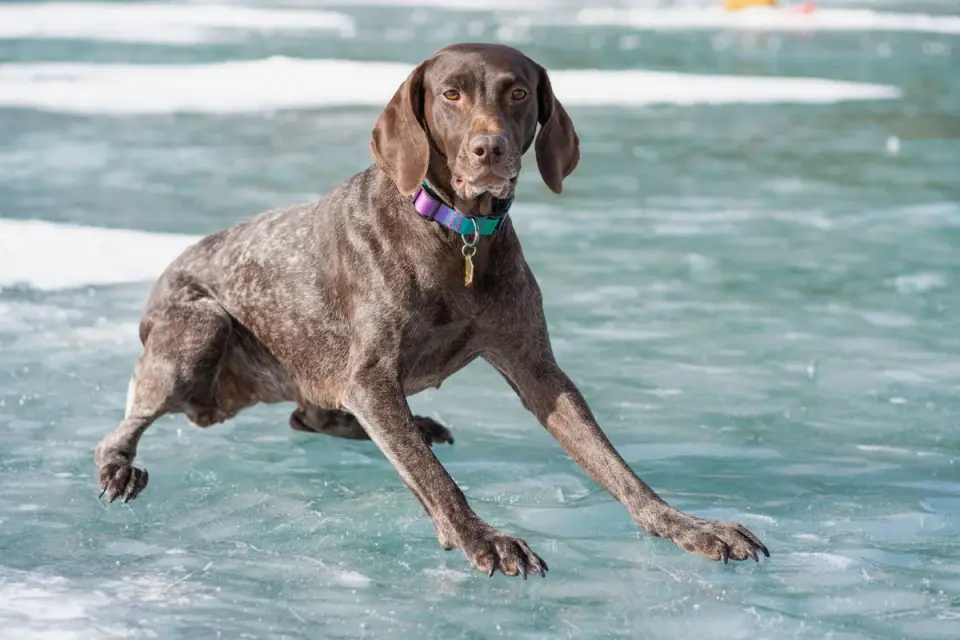
For dogs whose owners are managing an existing orthopedic issue — a torn cruciate that’s been repaired, moderate hip dysplasia, a dog recovering from a joint procedure — winter is exactly when footing-focused, lower-impact options matter most. Balance and proprioception work indoors, done a few minutes at a time on a non-slip mat, can maintain the stability that ice keeps testing outside; our mechanism-first look at balance and proprioception exercises breaks down which drills are worth the time. And for owners weighing whether to bring the whole routine indoors on the worst weeks, our guide to at-home physical therapy for dogs covers what a rehab-informed home session can look like versus what still needs a vet’s eyes on it.
Building the actual winter routine
Here’s roughly what I tell owners, adjusted for the individual dog:
- Split one long walk into two or three shorter ones — the warm-up cost of a cold session is real, and you pay it every time you head back out, so paying it twice for fifteen minutes each beats paying it once for a stiff forty-five.
- Check the surface before the dog does. A boot test on concrete or a quick look at a trail tells you more than the forecast.
- Warm up indoors first for arthritic or senior dogs — a few minutes of easy movement in the house before stepping onto cold pavement gives a stiff joint a head start.
- Watch the paws for ice balls between the toes, road salt residue, and cracked pads, especially on breeds with more foot fur.
- Move intense play — fetch, tug, sprint work — to a point in the walk after the dog has been moving for five to ten minutes, not as the opening move.
A dog with a diagnosed heart condition needs a separate conversation before any of this, because cold air and cardiac workload interact in ways that a healthy dog’s routine doesn’t have to account for; our vet’s decision checklist on exercising a dog with a heart murmur is the right starting point if that applies to your dog.
By the time I see these owners again in spring, the ones who kept up shorter, footing-aware winter walks almost always have a dog that’s moving as well as it was in October. The ones who stopped walking entirely because of the cold usually come in with a stiffer dog, not a safer one. That’s not a controlled result — it’s what I watch happen, season after season, in the same exam room with the same kinds of dogs. It’s the reason I push back gently when an owner tells me they’ve decided to just wait out the winter indoors.
Where I land
Total rest is the wrong response to cold weather for the overwhelming majority of dogs, including most arthritic seniors. The counterargument worth taking seriously is real: a dog with severe untreated arthritis, a recent orthopedic surgery, or a genuine cold-intolerance issue (very short coat, very low body fat, very young or very old) may need outdoor time cut back hard on the coldest days, and that’s a case-by-case call with your vet, not a blanket rule. But for the dog whose owner is tempted to skip walking because it’s thirty-one degrees out, my recommendation is the same one I gave Daisy’s owner: shorter, more frequent, better-timed, footing-checked — not fewer, and not none.
Frequently asked questions
Is it safe to walk a dog in freezing temperatures?
For most healthy dogs, yes — shorten the walk, check the ground for ice, and watch the dog's gait and paw behavior rather than relying on the thermometer alone. Dogs with thin coats, arthritis, or heart conditions need extra caution.
How cold is too cold for a dog to exercise outside?
There's no single safe number; it depends on coat type, body size, health status, and wind chill. A dog lifting its paws, shivering, or trying to turn back is telling you more than any app.
Do joint supplements help a dog stay active in winter?
Ingredients like chondroitin and green-lipped mussel have research behind mechanisms relevant to joint comfort, but they support a walking routine — they don't replace shorter sessions, better footing, and a proper warm-up.
Sources
- Chondroitin supports synovial fluid homeostasis — Frontiers in Veterinary Science
- Glucosamine HCl and cartilage degradation — Journal of Veterinary Medical Science
- Green-lipped mussel powder and inflammatory markers — Nutrients