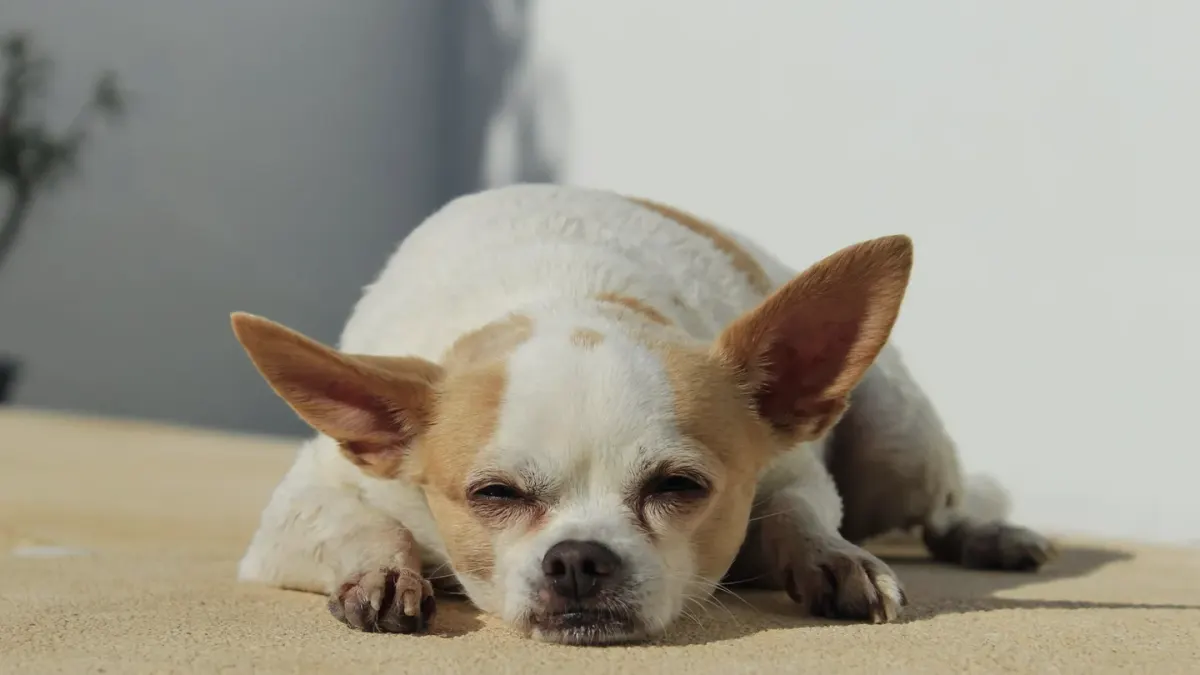
A ranch hallway, a baby gate across the stairwell, and a 9-year-old, 68-pound Labrador who plants his front feet when he sees steps. That is the starting point. His owner wanted to keep muscle without forcing the climb, so we mapped a single-floor loop: rug to hallway to kitchen, all gates closed, leash dragging for steering. Three weeks in, his sit-to-stands looked steadier and he was choosing to lie on his side rather than flop. The lesson was not fitness magic; it was removing vertical load and replacing it with horizontal work he could repeat daily without soreness the next morning.
Call the main floor your gym
Block stairs with a gate. Lay runners over slick floors. Work in 5-minute blocks, twice a day to start.
Do sit-to-stands on a mat, 3 to 5 reps. Do hallway leash walks at a slow march, 20 to 30 feet per pass. Do nose work: hide three treats in boxes at floor level. Rest between blocks. Watch breathing, foot slips, and willingness to start again.
If you want rainy-day structure, borrow ideas from Indoor Exercise Ideas for Rainy or Bad-Weather Days and keep everything on one level. Dogs with back histories need extra caution; review Exercise and Rehab Basics After IVDD or a Back Injury before adding new moves.
Trade steps for sets that spare joints
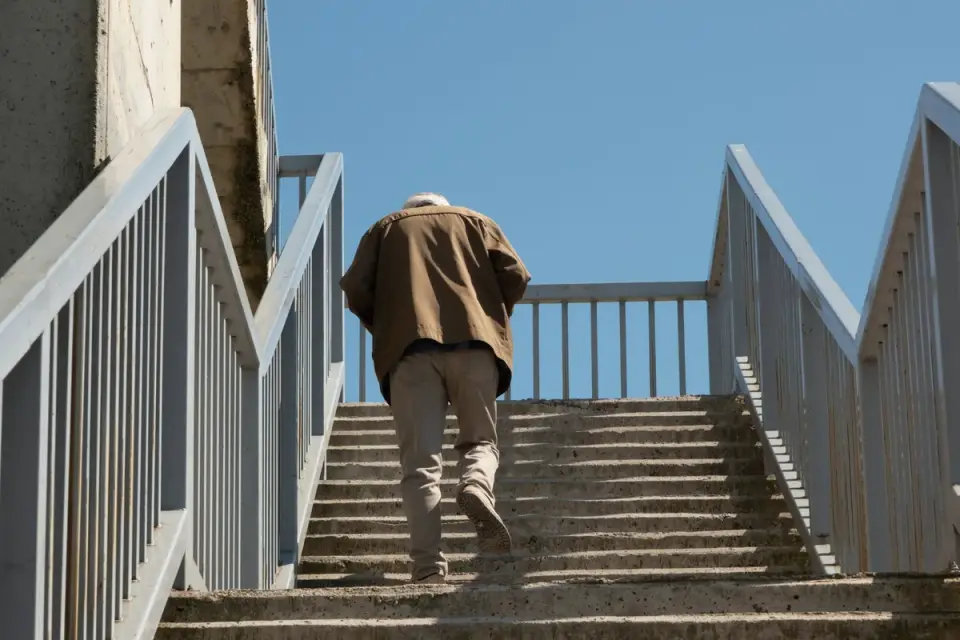
Stairs concentrate load on hips, stifles, and shoulders in a short burst. Flat work spreads it out. That tradeoff favors older or post-injury dogs, even though it feels less athletic.
My position: weigh what food and supplement support can realistically do for diet, mobility, and recovery, then put most of your effort into the daily movement dose. Research language is modest here. Chondroitin “supports healthy synovial fluid homeostasis” in work reported by Frontiers in Veterinary Science, and glucosamine work is described as work that “prevent experimentally induced cartilage degradation in vitro” by the Journal of Veterinary Medical Science. Green-lipped mussel data remain early: one laboratory summary notes “BMO, GMO, and KO all alleviated paw swelling in rats and reduced serum levels of rheumatoid factor (RF), anti-cyclic citrullinated peptide (anti-CCP) antibody, and pro-inflammatory cytokines such as TNF-α and IL-17” in Nutrients. That may help support whole-patient health, not replace training, weight control, or veterinary care.
She tried to swap stairs for repeated fetch down the long hallway with her 4-year-old, 52-pound border collie mix. By day 10 the dog was skidding into the doorframe, panting hard, and skipping the evening session. The failure was predictable: high speed plus hard stops on laminate punishes the same joints stairs punish. We cut the distance in half, put down a runner, switched to search games and slow cookie-stretches, and capped sessions with a timer. The dog re-engaged because the work stopped hurting. Intensity is not the point when stairs are off the table; control is.
Build the week without leaving the level
Rotate three session types. Keep a log.
Strength: sit-to-stand, down-to-stand, three-leg standing with light hand support. 2 to 3 sets, low reps.
Sniff and brain: snuffle mat, muffin-tin hides, find-the-person in one room. Let the nose set the pace.
Easy cardio: marching hallway laps, figure-eights around two chairs, step-overs over a broomstick on the floor.
Increase only one variable per week — minutes, reps, or passes. For weight-loss context, follow the progression logic in How to Gradually Increase a Dog’s Exercise for Weight Loss.
The edge case was a 13-year-old, 19-pound terrier in a split-level home where even a single step to the patio was a barrier. The owner carried him out for potty, then worried he was losing hind-end muscle. We added carpet tiles to form a 12-foot track, did assisted stands with a towel sling, and used lick mats after sessions to settle him. By week four he was holding a 10-second stand without leaning on furniture, which changed the plan more than any supplement tweak. Small dogs lose traction fast, so surface matters as much as exercise choice.
The counterargument is that avoiding stairs deconditions a dog. True, if you do nothing else. Flat-floor strength, body-weight reps, and sniff work maintain muscle and joint range when stairs are unsafe. Stop and call your veterinarian for sharp yelping, knuckling, new limping, swelling, or reluctance to rise the next day.
Frequently asked questions
How much indoor exercise is enough if my dog cannot use stairs?
Start with two 5-minute flat-floor blocks daily of strength, sniff work, and slow walking, then add minutes or reps weekly if recovery stays clean.
What should I avoid?
Avoid stair repeats, sprint fetch on slick floors, jumping on and off furniture, and any move that causes slipping, yelping, or next-day reluctance to move.
Sources
- Synovial fluid homeostasis study — Frontiers in Veterinary Science
- Cartilage degradation in vitro study — Journal of Veterinary Medical Science
- Marine oil paw swelling study — Nutrients