Rebuilding a Dog's Stamina After an Illness or Long Rest
Medically reviewed by Justin Shmalberg, DVM, CVA, ACVN, ACVSMR — For general education — not a substitute for veterinary care.
Rebuilding a dog's stamina after an illness works best as a graded, weekly progression, not a single big walk.

On this page
The dog I remember most clearly here was a nine-year-old, 62-pound Golden Retriever named Otis, six weeks off a bout of pancreatitis that had kept him hospitalized for three days and largely sedentary for another three weeks after that. His owner described the specific moment she got worried: Otis, who used to bound up the porch steps two at a time, stood at the bottom of three low steps one October evening and just looked at them. He wasn’t limping. He wasn’t in obvious pain. He was simply out of gas, and she didn’t know whether to push him or wait him out. That question — push or wait — is the one I get more than almost any other after a dog has been sick or immobile for a while, and it’s worth answering carefully, because both extremes cause problems.
Why stamina drops faster than it comes back
Muscle and cardiovascular conditioning are use-dependent tissue, and dogs lose them quickly. A dog confined to crate rest, hospitalized, or simply lethargic from illness for two to three weeks can lose a meaningful percentage of muscle cross-sectional area in that window, particularly in older dogs whose baseline muscle reserve is already lower. That loss doesn’t reverse on the same timeline it took to accrue — rebuilding tends to take roughly twice as long as the deconditioning did. This is the single most common mistake I see: an owner sees the dog “acting normal” again and jumps straight back to the pre-illness exercise routine, and the dog either relapses into fatigue, strains a soft-tissue structure that hasn’t caught back up to the joints, or simply refuses to engage.
The fix isn’t complicated, but it does require patience. Build the return to activity in graded weekly blocks, watching specific, observable markers rather than a calendar date, and hold the line even when the dog looks eager to do more than the plan calls for.
Week one: control the variables, not the mileage
In the first several days back, I’m not thinking about distance at all — I’m thinking about frequency and surface. Two or three flat-ground walks a day, five to ten minutes each, on a leash short enough to prevent sprinting after a squirrel, is a reasonable starting point for most dogs recovering from a two-to-three-week illness or rest period. For dogs recovering from orthopedic surgery specifically, the timeline and restrictions should come directly from the surgeon, not from a general guide like this one — that distinction matters and I don’t blur it with clients. For a broader sense of how walk length should scale to a dog’s age and condition once you’re past this acute window, How Long Should a Dog Walk Be? A Vet’s Age-by-Age Breakdown is a reasonable next stop, though those numbers assume a dog that isn’t actively recovering.
What I’m actually watching during those short walks: does the dog’s respiratory rate come back down within a few minutes of stopping, or does it stay elevated? Does the gait stay even, or does a slight hitch appear only after the fifth minute, which tells you fatigue rather than pain is driving it? Is the dog choosing to lie down unprompted when you pause? Those are better signals than distance covered, because they tell you what the cardiovascular and musculoskeletal systems are actually tolerating that day, which can vary even within the same week.
Weeks two through four: progress load before you progress duration
Once a dog is tolerating the week-one baseline without next-day soreness, stiffness, or reluctance to rise, I typically extend duration by roughly ten to fifteen percent per week rather than jumping distance outright, and I introduce mild terrain variation — a gentle grass slope, a few extra minutes — before I introduce speed. Owners often want to add a longer weekend hike at this stage because the dog “seems fine,” and this is exactly where I push back the hardest, because a single overreaching session can set a dog back a full week of the gradual gains that took real effort to build.
This is also where targeted strengthening work earns its place, and where I’d point an owner toward structured guidance rather than improvising — Core-Strengthening Exercises for Dogs and Balance and Proprioception Exercises for Dogs both rebuild the stabilizing musculature around the spine and limbs that tends to atrophy fastest during forced rest, and doing them alongside the walking progression, not instead of it, tends to shorten the overall timeline back to full stamina.
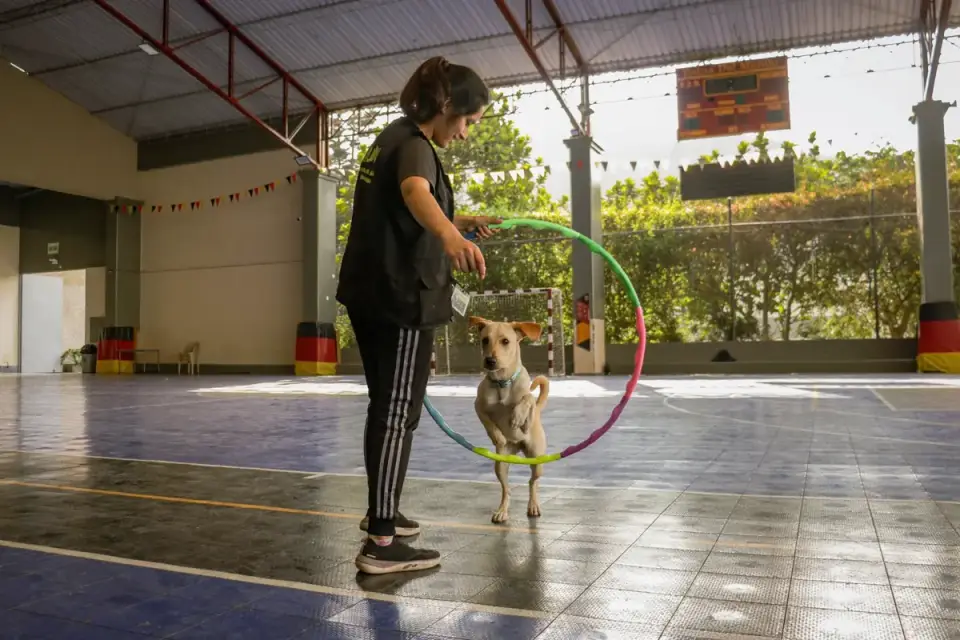
I had a client last spring with a seven-year-old Border Collie mix, Piper, recovering from a three-week bout of immune-mediated hemolytic anemia that left her severely deconditioned — barely able to walk the length of a driveway without stopping. We built her back over roughly eight weeks: five-minute flat walks for the first ten days, then short grass-incline additions, then, around week five, the first reintroduction of a slow fetch session capped at six throws. What struck her owner most wasn’t the return of stamina itself but how specifically gradual it needed to be — twice, when she tried to compress the timeline because Piper “seemed bored,” Piper napped for the rest of the afternoon in a way she hadn’t in weeks. That pattern, more than anything on paper, is what taught the owner to trust the pacing over the dog’s apparent enthusiasm.
Where joint and mobility support actually fits — and where it doesn’t
Nutrition is where I get asked to overstate things most often, so I want to be precise about what the ingredient literature actually supports and where I’m drawing an inference versus citing evidence directly. Glucosamine and chondroitin remain among the most researched joint-support ingredients in dogs, and in vitro and review-level work has found that Journal of Veterinary Medical Science reports glucosamine HCl can help prevent experimentally induced cartilage degradation in laboratory models — that’s a mechanistic finding, not a clinical guarantee, and I say that deliberately. Separately, recent peer-reviewed research in Frontiers in Veterinary Science describes chondroitin as supporting healthy synovial fluid homeostasis, which is a structure/function claim about joint lubrication, not a treatment claim about disease. Green-lipped mussel powder has shown, in laboratory research published in Nutrients, that its extracted compounds alleviated paw swelling and reduced markers of inflammation in animal models — again, a mechanistic signal worth weighing, not proof of an outcome in a recovering pet dog.
None of that literature was generated in dogs specifically rebuilding stamina after illness, and I won’t pretend otherwise. What I tell owners is narrower and more honest: if a dog’s stamina plateau seems tied to joint discomfort rather than pure cardiovascular deconditioning — a hesitance on stairs that looks more like pain than fatigue, for instance — a joint-support ingredient with decent mechanistic backing may be a reasonable adjunct to discuss with your vet, layered onto the conditioning plan rather than substituted for it. It is not a shortcut around the graded-return timeline, and any product claiming otherwise should be read skeptically.
When the plateau isn’t about conditioning at all
Sometimes stamina doesn’t come back on schedule, and that’s a signal worth taking seriously rather than pushing through. If a dog is still fatiguing after four to six weeks of a properly graded plan, or if you notice pale gums, an increased respiratory rate at rest, coughing, or any regression rather than plateau, that’s a reason to go back to the primary vet before advancing the exercise plan further — it may point to an underlying issue the initial illness masked or caused, not simply deconditioning. A rehab-trained vet is also worth involving directly if there’s any lingering lameness, and At-Home Physical Therapy for Dogs: What It Is and When You Need a Rehab Vet is a useful primer on knowing when that referral is warranted versus when home exercises are genuinely enough.
The bottom line
Otis, the Golden from the opening, was back to taking porch steps at a normal clip by about week five, once his owner accepted that the plan needed to be boring for a while before it could be fun again. That’s the pattern I see most consistently: stamina returns reliably when the return to activity is graded by observable signs — breathing, gait, willingness to rise — rather than driven by the calendar or the dog’s apparent mood on a given afternoon. Weigh any supplement or shortcut against that basic conditioning timeline rather than in place of it, and loop in your vet early if the plateau doesn’t resolve on a reasonable schedule.
Frequently asked questions
How long does it typically take a dog to regain stamina after being sick?
It varies with the length and severity of the illness, but as a general rule, expect the rebuilding period to take roughly twice as long as the period of inactivity — a dog down for three weeks often needs five to six weeks of graded activity to return to baseline stamina.
Should I let my dog "push through" tiredness on a walk to build stamina faster?
No. Pushing through fatigue is one of the most common causes of relapse or soft-tissue injury during recovery; progress duration and terrain gradually instead, using the dog's recovery signs — breathing, gait, willingness to rise — as your guide.
Sources
- Glucosamine hydrochloride and cartilage degradation: a review — Journal of Veterinary Medical Science
- Chondroitin sulfate and synovial fluid homeostasis in canine joint health — Frontiers in Veterinary Science
- Green-lipped mussel powder and inflammatory markers in animal models — Nutrients