On this page
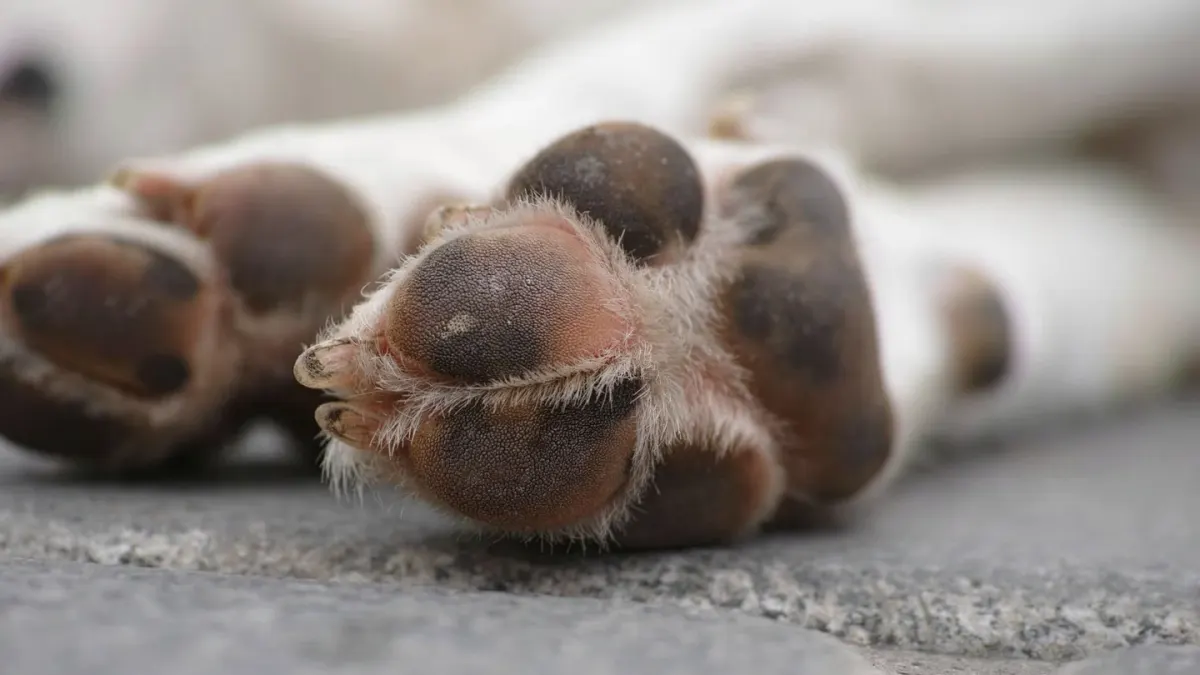
Do this before you clip on the leash: walk to the hottest-looking stretch of your route — the open sidewalk, not the shaded lawn — and press the back of your hand flat against it. Hold for seven seconds. If you have to pull away before that count is up, the pavement is too hot for paw pads, full stop. That single test settles more arguments than a thermometer ever will, because a dog’s feet meet the asphalt long before the rest of the dog feels the air.
I still think about a two-year-old French Bulldog named Gus, brought into an afternoon appointment after a 20-minute midday walk on a 91°F day in July. His owner said he’d stopped a block from home, refused to keep moving, and started open-mouth breathing with a redder tongue than usual. By the time I saw him, his gums were tacky and his respiratory rate hadn’t settled after fifteen minutes of rest in air conditioning. He recovered with fluids and cooling, but the timeline stuck with me: onset was fast, under half an hour, and the trigger wasn’t an obviously brutal day — it was a normal summer afternoon and a flat face that couldn’t move air the way a longer-nosed dog can.
Run the pavement test before you check the forecast
The seven-second hand test is the single most reliable field check you have, because it measures the actual surface your dog will be walking on rather than an ambient reading taken in the shade six feet up. Asphalt and concrete absorb solar radiation and re-radiate it; on an 85°F day, exposed pavement can reach roughly 135°F, and skin damage to a paw pad can start within about a minute of contact at those temperatures, according to reporting compiled by the AKC. Dark asphalt runs hotter than light concrete, and both run far hotter than grass or dirt in the same yard. So test the actual surface, not just “outside.”
Do it in this order:
- Press the back of your hand to the pavement for seven seconds at the hottest point on your route — mid-afternoon, direct sun, no shade.
- If it’s uncomfortable before seven seconds, reroute to grass, dirt, or wait for morning or evening.
- Recheck at the halfway point of longer walks; sun angle and surface heat shift over even 20 minutes.
- Carry water and check gum color and panting rate at rest stops rather than only at the end.
Add the air temperature and humidity math
Pavement heat is the fast, mechanical risk — burns happen in minutes. Heatstroke is the slower, systemic risk, and it’s driven by air temperature plus humidity together, not either alone. A commonly cited veterinary rule of thumb: if the Fahrenheit temperature and the percent humidity add up to roughly 150 or higher, outdoor exercise should be scaled back or skipped, because humid air blunts a dog’s ability to cool itself through panting. That’s a meaningfully different limit than most people assume from checking a single number on their phone.
Once the temperature alone climbs past about 85°F, cut walk length to 10–15 minutes and move it to early morning or evening, when both the air and the pavement have had hours to cool. The Cornell University College of Veterinary Medicine recommends exactly this kind of schedule shift for summer walking, along with always carrying water and watching for excessive panting or lagging behind on the leash — an early sign owners frequently miss because it looks like ordinary tiredness rather than a warning.
Know which dogs need a lower bar
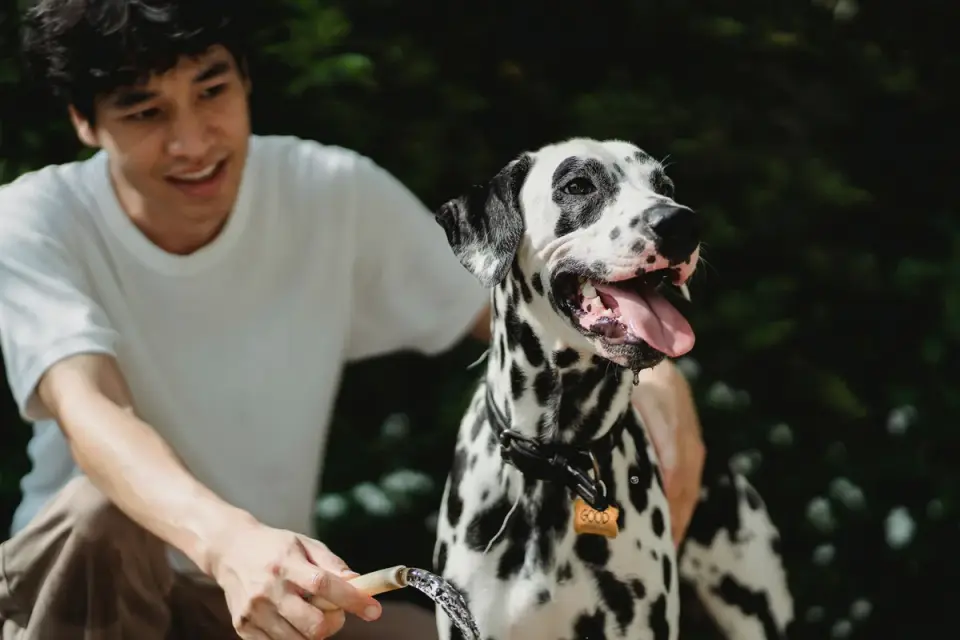
Not every dog gets the same threshold, and this is where I push back on blanket temperature charts. Brachycephalic breeds — French Bulldogs, English Bulldogs, Pugs, Boston Terriers — are disproportionately represented in heat-stroke cases because their airway anatomy limits the airflow that panting depends on for evaporative cooling. A VetCompass study summarized by the Royal Veterinary College found flat-faced breeds at meaningfully elevated risk, with above-average body weight and age over two years also flagged as independent risk factors — meaning a heavier, middle-aged dog of any breed deserves the same caution as a brachycephalic one.
Older dogs carrying joint changes complicate the picture further. A dog managing hip or elbow discomfort often can’t reposition quickly to seek shade, can’t quicken its pace to get off hot pavement, and may already be panting more at baseline from mobility-related exertion — stacking a second stressor on top of heat load. I’m a nutritionist and sports-medicine clinician, not an emergency or critical-care specialist, so for an actual heatstroke event my guidance is always the same: cool the dog and get to a vet immediately rather than trying to manage it at home. Where I can speak with more confidence is the everyday decision-making that prevents that call from ever needing to happen — timing, surface checks, and knowing which dogs need the conservative version of every rule.
One owner I worked with had a nine-year-old overweight Labrador with early hip changes who’d normally take 45-minute midday walks without complaint. Over a hot week, the dog started sitting down twice on a route he’d always finished without pause, and his gait looked stiffer on the second half of the walk than the first — the opposite of his usual pattern, where he loosened up as he moved. We shifted his walks to 6 a.m. and cut midday activity to yard time only. The stiffness pattern reversed within a few days. That’s not proof heat alone caused it — dogs with joint changes have plenty of stiff days for reasons that have nothing to do with weather — but it illustrated something worth watching for: heat can make an existing mobility issue look worse than it is, and a schedule change is a low-cost first thing to try before assuming the joint itself has gotten worse. If you’re separately tracking a joint-supplement plan for a dog like that, our testing standards for how we evaluate dog joint supplements cover how we weigh label doses against the research, which is a different question from heat management but often comes up in the same conversation with owners of aging, heavier dogs.
The short version for a hot morning
Test the pavement with your hand before you test anything else — seven seconds, hottest spot on the route. Add temperature and humidity together as a second check, not a replacement. Shorten or reschedule for brachycephalic breeds, heavier dogs, older dogs, and any dog already managing joint or mobility issues, and treat excessive panting or reluctance to keep moving as a stop signal, not just fatigue. As summers keep running hotter in most of the country, this two-part check — hand on the ground, math in your head — is likely to matter for more dogs each season, not fewer, so it’s worth making it a habit rather than a once-a-summer thought.
Frequently asked questions
What's a simple test to know if pavement is too hot for my dog?
Press the back of your hand flat against the pavement at the hottest point on your route and hold it for seven seconds. If it's too uncomfortable to keep your hand there for the full count, the surface is too hot for paw pads and you should switch to grass, dirt, or wait for a cooler time of day.
Is there a temperature where I should just skip the walk entirely?
There's no single universal cutoff, but once air temperature climbs past about 85°F, shorten walks to 10–15 minutes and move them to early morning or evening. Add humidity into the decision too — many vets use temperature plus humidity adding up to around 150 as a signal to scale back outdoor exercise.
Are some dogs at higher risk of heat stroke than others?
Yes. Brachycephalic breeds like French Bulldogs, Pugs, and Boston Terriers are disproportionately represented in heat-stroke cases due to airway anatomy that limits panting efficiency, and above-average body weight and age over two are additional independent risk factors identified in veterinary research.
Sources
- How to Protect Dog Paws From Hot Pavement, Sidewalks — AKC
- Summer heat safety tips for dogs — Cornell University College of Veterinary Medicine
- Flat-faced dogs such as bulldogs, French bulldogs and pugs at increased risk of heat stroke — Royal Veterinary College