
On this page
The waiting room was quiet except for the clicking of tiny nails on tile as a six-year-old, 14-pound Dachshund shifted his weight off one hind leg before sitting. His owner had carried him up two flights of stairs that morning because he paused at the bottom, looked up, and waited. She asked whether joint supplements were only for large dogs, and whether starting one now would change anything about how he moved, how comfortable he felt on walks, or how his quality of life held up over the next few years. That question comes up constantly in small-breed practice, and it deserves a clearer answer than body weight alone.
By three weeks in on a consistent routine of short walks, traction rugs, and weight control, that same dog was taking the first three stairs on his own before asking to be carried. The change was not dramatic, and I do not present it as proof of any product outcome. It was a movement marker, the kind I track in rehab: willingness to load, symmetry at a trot, ease rising after rest. For small breeds, those markers matter more than size. Think in movement, comfort, and quality of life, and the decision gets simpler. Most small dogs do not need joint support because they are small. They may need it because of how they are built and how they live.
So what is the verdict for little dogs?
Yes, many small-breed dogs earn consideration for joint support, especially as they age or when conformation loads joints unevenly.
Small does not mean lightly loaded. Short limbs, long backs, bowed forelimbs, and luxating patellas concentrate force through small contact areas. Add jumping off couches, slippery floors, and extra ounces around the ribs, and comfort can slip early. My position is evidence-bounded: consider support when movement changes, risk is high, or age is advancing, rather than supplementing every puppy by default. I pair that with food therapy principles, gentle manual work such as Tui-na where appropriate, and realistic may help support mobility framing.
The strongest counterargument is fair. Small dogs live long lives and often stay active without visible stiffness, so why add anything. I take that seriously because over-supplementation without a reason helps no one. I still land on selective use because waiting until rising is hard means missing the window when supporting comfort is easiest to sustain.
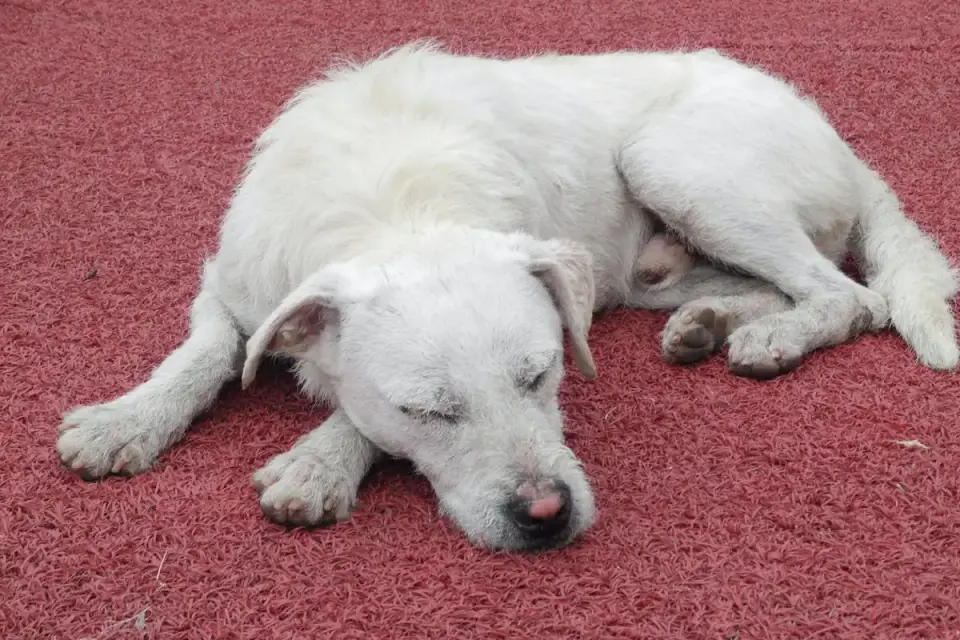
Why does size mislead us on the bench?
When I read a label at the bench, I look past the front claim and go straight to actives, dose by weight, and third-party verification. That habit is the core of How We Test Dog Joint Supplements — and What to Check, and it applies even more to small dogs where half-chews and tiny scoops invite dosing drift.
Glucosamine and chondroitin are among the most studied joint support ingredients for dogs, which is why they anchor most formulas I inspect. The laboratory work helps explain interest without overstating it. One review summarized glucosamine work as showing it can “prevent experimentally induced cartilage degradation in vitro,” as reported in the Journal of Veterinary Medical Science. In vitro is not the same as a dog climbing stairs, yet it gives a plausible reason these ingredients keep appearing in mobility formulas.
Chondroitin has a separate line of evidence around joint environment, described as work that “supports healthy synovial fluid homeostasis” in Frontiers in Veterinary Science. Synovial fluid is what lets joints glide, so homeostasis is structure/function language I can stand behind when I talk about supporting comfort during daily movement.
For green-lipped mussel, the published animal-model data are often cited for context. One study in Nutrients reported that “BMO, GMO, and KO all alleviated paw swelling in rats and reduced serum levels of rheumatoid factor (RF), anti-cyclic citrullinated peptide (anti-CCP) antibody, and pro-inflammatory cytokines such as TNF-α and IL-17.” That is rat data, not a canine mobility claim, and I weigh it that way on the bench.
Small dogs need smaller absolute doses, not weaker logic.
When did less turn out to be less?
A nine-year-old, 11-pound dog with early morning stiffness had been getting roughly one-third of a large-dog chew, eyeballed with a kitchen knife, for two months. The owner reported no change in the first ten steps after naps by day 10 or by day 30, and the dog still hesitated at the curb on a half-mile loop. On inspection the label dose was written for a 50-pound dog, the split was uneven, and there was no certificate of analysis available for that lot. We stopped guessing, recalculated a consistent daily amount for his actual weight band, added rugs at the two slickest turns in the hallway, and trimmed his meals back to steady body condition. The lesson was not that support failed. The approach failed because inconsistent dosing cannot be evaluated.
That tradeoff is common with small breeds. Splitting large chews saves money but complicates consistency, palatability, and intake. Powders and small chews formulated for lower weight bands are often easier to measure accurately, which is also why guidance on Adjusting a Dog’s Joint Supplement Dose as Their Weight Changes emphasizes rechecking weight tiers rather than rounding by eye.
What should you actually check before starting?
I keep this practical and narrow. Confirm an appropriate product type for dogs, read the guaranteed analysis for named actives, match the daily amount to current weight, and look for lot-level quality documentation. For seniors, align the plan with the broader comfort picture discussed in How to Adjust Joint Supplement Dosage for a Senior Dog. Movement stays the outcome I follow, not the ingredient story alone.
Which small dogs change the calculus?
An eight-year-old, 9-pound dog with a grade II medial patellar luxation still trotted eagerly for 20 minutes yet sat out the last block home by week three of a new walking route. That pattern — good enthusiasm, late fatigue — is the edge case owners miss when they equate small with sturdy. Intermittent lameness, conformation risk, prior cruciate strain, and repetitive jumping create a different risk profile than age alone. Low-impact conditioning can help maintain muscle that steadies those joints, and the discussion in Is Swimming Good for Dogs With Hip Dysplasia? What the Joint Actually Needs is useful background on matching exercise to joint tolerance even when the diagnosis differs.
Acupuncture, Tui-na, and food therapy do not replace load management, weight control, or veterinary diagnosis. They sit alongside them, aimed at supporting ease of movement with gentle candor about what is possible in an older or structurally at-risk dog. Meet older dogs and their people where they are, and choose support that fits the dog in front of you.
Selective support beats routine supplementation.
Sources
- Chondroitin and synovial fluid homeostasis (DOI:10.3389/fvets.2026.1536366) — Frontiers in Veterinary Science
- Glucosamine and experimentally induced cartilage degradation (DOI:10.1292/jvms.25-0293) — Journal of Veterinary Medical Science
- Marine oil blends and paw swelling in rats (DOI:10.3390/nu18020215) — Nutrients