On this page
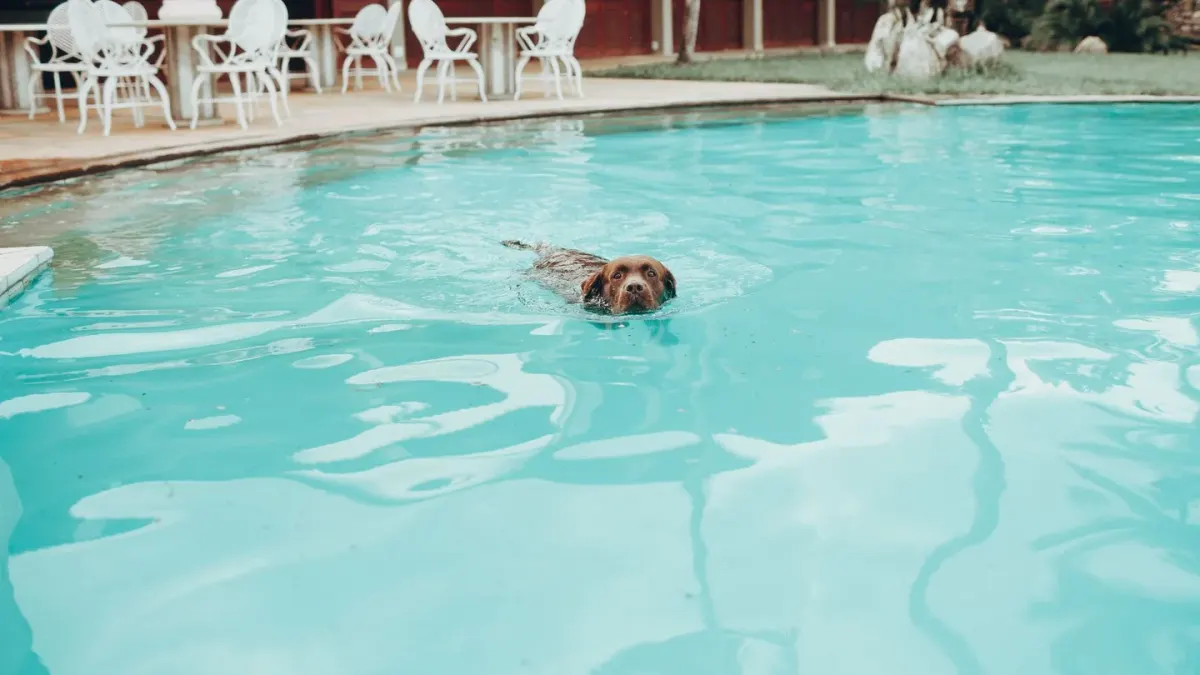
Is swimming actually doing anything for a dysplastic hip, or is it just exercise that happens not to hurt as much? That’s the question I get most from owners standing at the edge of a rehab pool, leash in hand, dog already whining to get in.
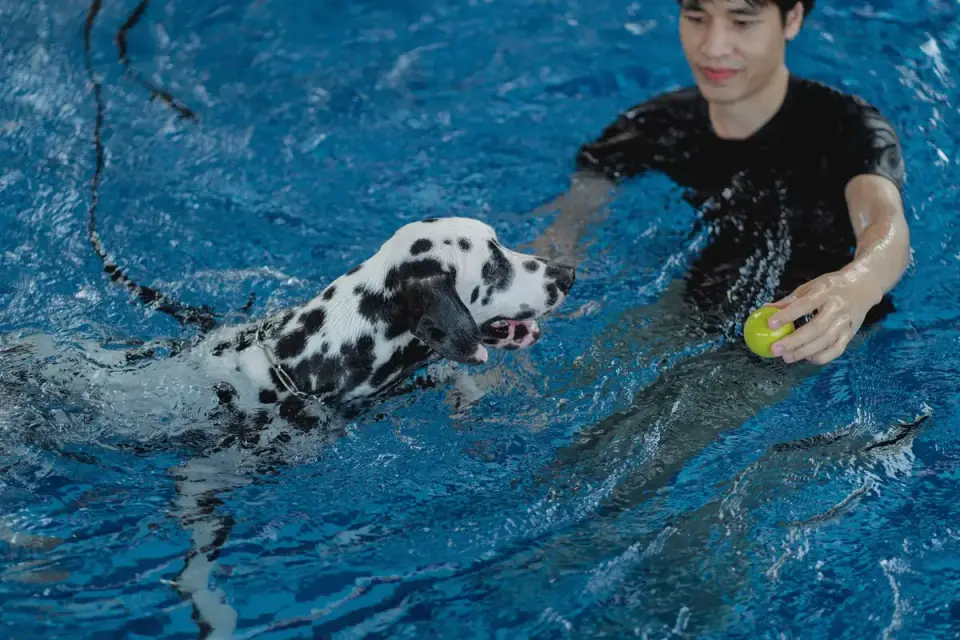
I’ve been treating dogs with hip dysplasia for a long time, and the ones who do best are rarely the ones on a single supplement or a single therapy. In my practice I think of it as four pillars working together — the needle, the herb, the bowl, and the hands — and swimming sits inside that fourth pillar as a form of structured movement, not a replacement for the other three. A nine-year-old Labrador named Otis comes to mind: sixty-one pounds, moderate bilateral hip dysplasia confirmed on radiographs, and an owner who’d noticed him hesitating before jumping into the car over about three months. We started him in a heated pool twice a week, added acupuncture every other week, and layered in a joint-support regimen alongside Tui-na bodywork before and after sessions. None of those four pieces did the whole job alone. The pool gave him range of motion without concussive load; the bodywork kept the surrounding musculature from guarding; the herbs and food therapy supported him from the inside. That’s the integrative frame I bring to every hip case, and it’s the frame I want to apply here specifically to swimming.
Why water changes the physics of a bad hip
Hip dysplasia is fundamentally a mechanical problem — the femoral head doesn’t seat properly in a shallow or malformed acetabulum, so the joint takes uneven load and the surrounding cartilage and soft tissue wear unevenly too. Land-based exercise, especially anything with impact (jumping, stairs, hard turns), concentrates force through that already-compromised joint. Water removes most of that load. A dog submerged to shoulder height is bearing a fraction of its body weight through its legs, which means it can move the hip through a fuller arc than it could tolerate on land, without the jarring compression that aggravates inflamed joint tissue.
That’s the mechanism, and it’s a real one. What it isn’t is a cure. Swimming doesn’t remodel a shallow socket or regrow eroded cartilage. It’s a way to keep muscle mass and range of motion up around a joint that land exercise would otherwise punish.
What the evidence says about the ingredients people reach for alongside it
Most owners doing pool therapy are also feeding some kind of joint supplement, so it’s worth being straight about what the research actually supports. Chondroitin has research behind it for Frontiers in Veterinary Science: supporting healthy synovial fluid homeostasis, the fluid that lubricates the joint capsule and matters more, not less, when a dog is moving through water. Glucosamine HCl has been studied for its ability to help Journal of Veterinary Medical Science: prevent experimentally induced cartilage degradation in vitro, which is laboratory evidence, not a guarantee of the same effect in a living joint, but it’s the kind of data that keeps glucosamine on nearly every reputable label. And green-lipped mussel, a common third ingredient, showed in one study that mussel-derived compounds alleviated paw swelling and reduced markers of inflammation, including Nutrients: TNF-α and IL-17, in a rat arthritis model — again, not a dog study, but consistent with why the ingredient keeps showing up in joint formulas. None of that evidence tells you swimming plus a supplement will reverse dysplasia. It tells you the supporting cast has some real research behind it, and swimming is the exercise that lets a dysplastic hip actually use the mobility those ingredients are trying to preserve.
I lean on food therapy here too — warming, blood-moving foods in TCVM terms, alongside the Western structure/function ingredients above — because I’ve found dogs tolerate a slow, integrated build-up better than a sudden supplement-and-exercise overhaul. That’s not a claim I can hand you a citation for; it’s pattern recognition from years of cases, and I say so plainly.
Where swimming falls short, and what it can’t replace
The honest caveat: not every dysplastic dog swims well, and not every case benefits equally. Dogs in acute pain may guard so hard in the water that they never achieve a real range of motion — they paddle stiff-legged instead of extending the hip. Dogs with concurrent spinal or cardiac issues need clearance before you put them in a pool at all. And swimming does nothing for the muscle groups that stabilize the hip during land activities like stairs and getting up from a lie-down, which is where targeted land-based strengthening and, in my hands, Tui-na work to release compensatory tension in the lumbar and gluteal muscles, still earn their place.
The dog I think about most on this point wasn’t Otis — it was a ten-year-old German Shepherd named Bear, seventy-eight pounds, whose owner swam him religiously for months and was frustrated that he still struggled to stand up from the kitchen floor after resting. The water was helping his in-pool mobility, but nothing was addressing what happened the moment he tried to rise against gravity on tile. Adding land-based strengthening and bodywork closed that gap; the pool alone hadn’t been able to.
For readers building out a fuller supplement plan around swimming, our guide on dog hip and joint supplement breaks down what actually belongs in the scoop, and if the diagnosis on the table is elbow rather than hip, what elbow dysplasia actually means when a vet says it out loud is worth a read too. If you’re deciding between the pool and a leash, swimming vs walking for an arthritic dog goes deeper into that specific tradeoff, and our broader piece on is swimming good exercise for dogs covers the mechanism outside the dysplasia-specific case.
Bringing it back to the whole dog
Swimming earns its place in a hip dysplasia plan because it’s one of the only exercises that loads the joint through a real range of motion without the impact that makes land exercise risky. It’s not a treatment on its own, and it’s not a supplement substitute. In the cases I’ve watched go well, it’s one piece sitting alongside bodywork, food therapy, and a joint-support routine chosen for what the label and the evidence actually back up — not one silver bullet doing all the work.

FAQs
Is swimming safe for every dog with hip dysplasia? Not automatically. Dogs in acute pain, with cardiac or spinal comorbidities, or who guard heavily in water should be cleared by a vet first and may do better starting on an underwater treadmill with controlled depth.
How often should a dysplastic dog swim? There’s no universal number — it depends on the dog’s pain level, fitness, and tolerance. Most rehab programs I’ve seen build gradually, often starting at two sessions a week and adjusting from there.
Does swimming replace joint supplements? No. They address different things — swimming is mechanical load management, supplements like glucosamine and chondroitin are aimed at supporting the joint tissue itself. They work best paired, not substituted.
Frequently asked questions
Is swimming safe for every dog with hip dysplasia?
Not automatically. Dogs in acute pain, with cardiac or spinal comorbidities, or who guard heavily in water should be cleared by a vet first and may do better starting on an underwater treadmill with controlled depth.
How often should a dysplastic dog swim?
There's no universal number — it depends on the dog's pain level, fitness, and tolerance. Most rehab programs build gradually, often starting at two sessions a week and adjusting from there.
Does swimming replace joint supplements?
No. They address different things — swimming is mechanical load management, supplements like glucosamine and chondroitin are aimed at supporting the joint tissue itself. They work best paired, not substituted.
Sources
- Effects of Chondroitin on Synovial Fluid Homeostasis — Frontiers in Veterinary Science
- Glucosamine HCl and Cartilage Degradation: An In Vitro Review — Journal of Veterinary Medical Science
- Green Lipped Mussel Compounds and Inflammatory Markers in a Rat Arthritis Model — Nutrients