On this page
A ten-year-old Labrador named Otis used to power through two-mile loops around his neighborhood without slowing down. Then, over about three weeks last spring, his owner noticed he’d stop cold at the same corner near a storm drain, sit down, and refuse to move until she turned back toward home. No limping, no yelping — just a hard stop. She assumed it was stubbornness until she noticed he’d also started hesitating before jumping into the car.
That’s the case that sticks with me, because it’s such a common shape: a dog who was fine, then wasn’t, and the change showed up as refusal rather than obvious pain. In my practice, I’ve watched this play out dozens of times, and the diagnostic work is almost always about separating “won’t” from “can’t.”
Read the Refusal Like a Symptom, Not a Personality Trait
A dog sitting down mid-walk isn’t being difficult — it’s communicating, and the job is to figure out what it’s communicating. I sort the possibilities into two rough buckets, because the buckets point toward completely different next steps.
The first bucket is physical: orthopedic pain (hips, stifles, elbows, spine), muscle fatigue, paw pad injury, or an underlying condition like early degenerative joint disease. The second is situational: fear of a specific location, heat intolerance, overstimulation, or simple overexertion for a dog who isn’t conditioned for the distance. Weigh what a supplement can realistically do for diet, mobility, and recovery only makes sense once you’ve ruled out the second bucket — no ingredient fixes a dog who’s scared of a garbage truck.
Age matters here. A young, previously energetic dog who suddenly balks is more likely dealing with an acute injury or a fear-based trigger. An older dog with a gradual pattern — slower starts, reluctance on stairs, a shorter distance tolerated each week — points toward chronic joint change. Otis fit that second pattern: no single incident, just a slow narrowing of what he was willing to do.

What the Physical Exam Actually Rules In or Out
A vet visit for this complaint isn’t a formality. Gait assessment, joint palpation, and sometimes radiographs are how you find out whether a dog is guarding a sore stifle or simply doesn’t want to pass the mail carrier’s house again. I ask owners to note specifics before the appointment: which leg, if any, seems to bear less weight; whether the dog is worse after rest or after activity; whether stairs, the couch, or the car are newly difficult.
Glucosamine and chondroitin are among the most studied joint support ingredients for dogs, and there’s a reasonable evidence base behind each on its own terms. Chondroitin has been studied for its role in supporting healthy synovial fluid homeostasis, per a 2026 paper in Frontiers in Veterinary Science. Separately, glucosamine HCl has shown the capacity to prevent experimentally induced cartilage degradation in vitro, according to a review in the Journal of Veterinary Medical Science. Neither claim says a supplement reverses arthritis or eliminates pain — they describe mechanisms, not cures, and that distinction matters when you’re deciding whether a product belongs in a dog’s routine.
Green-lipped mussel has its own literature. Research published in Nutrients found that mussel-derived compounds alleviated paw swelling in an animal model and reduced markers of inflammation, including TNF-α and IL-17. That’s laboratory evidence, not a guarantee of outcome in a walking, aging dog — but it’s a legitimate reason the ingredient shows up in joint formulas as often as it does.
If your veterinarian’s exam and imaging point toward genuine joint changes, a well-formulated supplement can be a reasonable piece of the plan alongside weight management, appropriate exercise modification, and sometimes prescription pain control. It is not a substitute for any of those, and it’s not a fix for a dog who’s simply refusing to walk past a specific mailbox.
The Case for Ruling Out Behavior Before You Reach for a Bottle
I want to be direct about where I land: before anyone reaches for a joint supplement, rule out fear, heat, fatigue, and pad injury first. That’s my position, and I’ll defend it, because the counterargument I hear most is reasonable — “the supplement can’t hurt, so why not start it while we figure out the rest?” It’s a fair point. A quality joint ingredient at an appropriate dose is low-risk for most healthy dogs.
But starting a supplement as a default response muddies the diagnostic picture. If a dog’s refusal resolves because the weather cooled down or because you rerouted away from the storm drain, and you’d also started a supplement that week, you’ll credit the wrong variable. That matters for future decisions about this dog and about how you interpret similar cases later. My boundary here is the same one I hold in any integrative recommendation: I can speak to what an ingredient’s evidence supports and what a formulation’s label claims, but I can’t diagnose a specific dog’s refusal from a description — that’s an exam-room job, not an article’s.
The dog I keep thinking about, besides Otis, was a nine-year-old terrier mix whose owner brought her in convinced it was arthritis. Full workup, normal joints, clean gait — turned out she’d had a bad experience with a skateboard on that same block two months earlier and had generalized the fear to the whole route. Different route, problem solved. If we’d started a joint supplement first, it would have looked like it worked, and it would have been the wrong lesson entirely.
Building the Actual Plan
Once you and your vet know what you’re dealing with, the plan branches. For confirmed orthopedic disease, a dosed joint supplement, weight control, and modified exercise usually form the core, sometimes with prescription anti-inflammatories for flares. For behavioral or environmental refusal, the fix is route changes, desensitization, temperature management, or simply shorter, more frequent walks while conditioning rebuilds. For genuine fatigue in an unconditioned dog, the answer is often just patience and a slower buildup in distance, not a product at all.
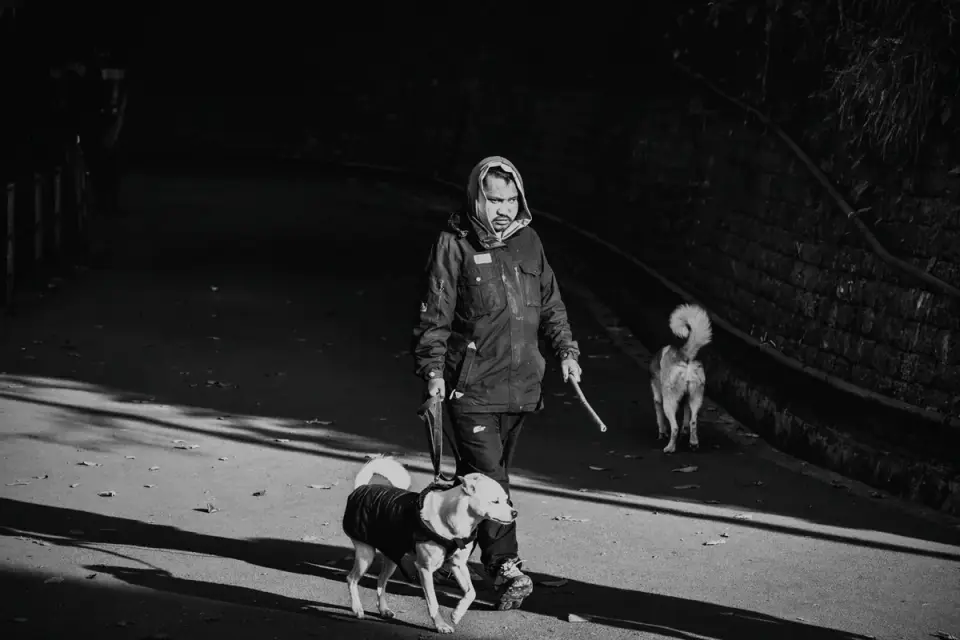
Otis, for what it’s worth, turned out to have early hip changes on radiographs. His vet started him on a joint supplement dosed appropriately for his weight, cut his walk distance temporarily, and had his owner reroute away from the storm drain corner just in case there was also something acoustic or visual bothering him there. Within a few weeks he was covering most of his old route again, at a slightly gentler pace. That’s one dog’s outcome, not a promise about what any supplement or plan will do for yours — but it’s a fair illustration of why the sequence (diagnose first, then choose the tool) tends to serve dogs better than reaching for the bottle on day one.
If you want a closer look at how ingredient claims and label doses get evaluated once you’re at the “choosing a supplement” stage, our team walks through the process in How We Test Dog Joint Supplements — and What to Check.
The next step, practically speaking: if your dog has stopped and refused to walk more than once or twice, get the orthopedic exam before you shop for a supplement. It’s the only way to know which problem you’re actually solving.
Frequently asked questions
My dog just sits down and won't move on walks — is that always a joint problem?
Not always. It can also reflect fear of a specific location, heat intolerance, fatigue, or a paw injury. A veterinary exam, including gait assessment and palpation, is the most reliable way to tell a physical cause from a behavioral one.
Should I start a joint supplement right away if my dog refuses to walk?
It's better to get a diagnosis first. Starting a supplement before ruling out fear, heat, or overexertion can mask which factor actually caused the improvement, which makes future decisions harder to get right.
What ingredients have real evidence behind them for joint support?
Glucosamine and chondroitin are among the most studied options, with research examining synovial fluid support and cartilage protection. Green-lipped mussel has evidence around reducing inflammatory markers. None of this evidence claims a cure for arthritis or joint disease.
Sources
- Chondroitin Sulfate and Synovial Fluid Homeostasis — Frontiers in Veterinary Science
- Glucosamine HCl and Cartilage Degradation: A Review — Journal of Veterinary Medical Science
- Green-Lipped Mussel Compounds and Inflammatory Markers — Nutrients