How to Keep a Senior Dog's Muscles From Wasting Away
Medically reviewed by Justin Shmalberg, DVM, CVA, ACVN, ACVSMR — For general education — not a substitute for veterinary care.
Most owners notice the hips first, but by the time a senior dog's topline looks sunken, the muscle has usually been going for months — and food and load-bearing exercise matter more here than any capsule.
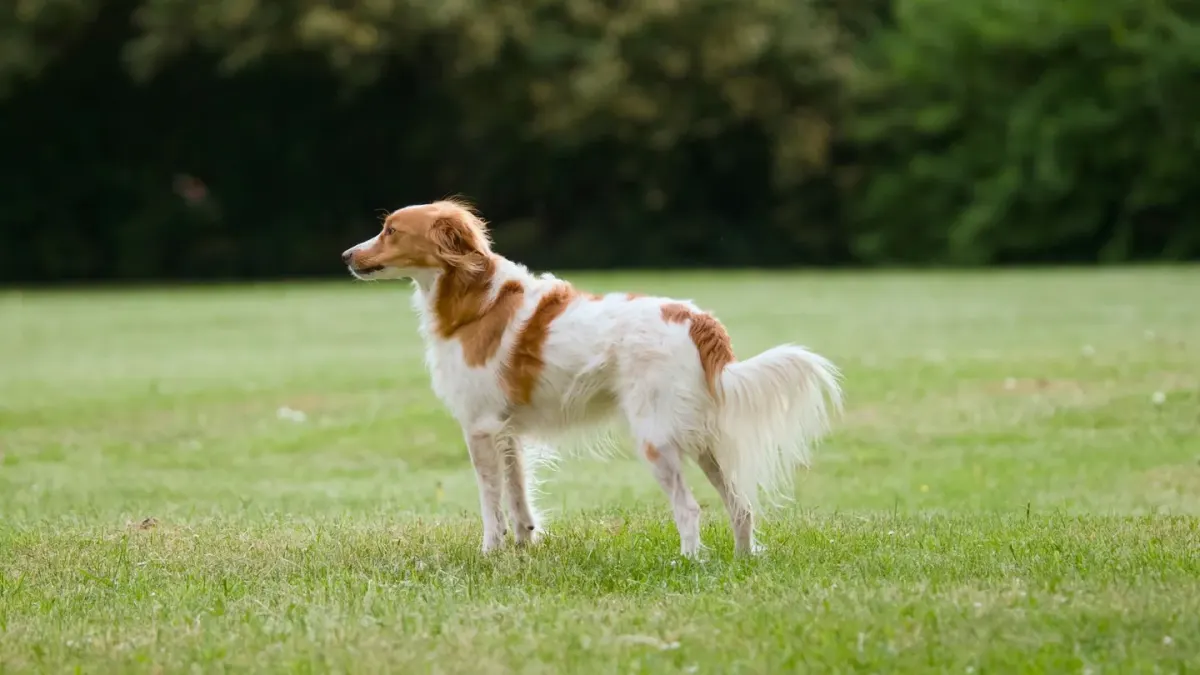
Is your dog eating the same amount, still finishing every bowl, and still losing muscle anyway? That’s the pattern I get asked about most, and it’s the one owners find hardest to believe — because it defies the logic that weight loss means eating less. It doesn’t, not here. Sarcopenia, the gradual age-related loss of skeletal muscle, runs on its own clock, separate from calories in and calories out.
In my practice, the dogs I flag earliest are the ones whose owners can pinpoint a moment: “he used to launch onto the bed, now he checks the height first.” I had a 10-year-old Labrador mix, about 68 pounds, come in because her owner noticed she’d started pausing at the bottom of three porch steps every morning in October, something she’d never done in July. Nothing else had changed — same food, same walks, same energy at the door. On exam her epaxial muscles over the spine felt thin under my hand, and her hips showed more bone than they had at her spring visit. That’s a muscle condition change, not a weight change, and her body condition score was still a normal 5/9. The two scores measure different things, and conflating them is the single most common reason muscle loss gets missed until it’s advanced.
Muscle score and body score are not the same number
This is the compare-and-contrast that trips up even attentive owners: body condition score (BCS) evaluates fat cover, while muscle condition score (MCS) evaluates the muscle itself, assessed by palpating the epaxials along the spine, the shoulders, hips, and temporal muscles at the skull. A dog can carry a perfectly normal BCS of 5/9 and still have moderate muscle atrophy underneath, because fat and connective tissue can fill in where muscle used to be. Clinically, WSAVA’s nutritional assessment guidelines call for both scores at every visit, precisely because BCS alone will miss this. If your vet is only stepping on a scale and eyeballing a waistline, ask them to run their hands over the spine and hips too.
It’s also worth naming the distinction Tufts Petfoodology: Tufts’ Petfoodology program draws between sarcopenia and cachexia: sarcopenia is the muscle loss tied to aging itself, while cachexia is muscle loss driven by an underlying disease process — kidney disease, heart disease, cancer — and the two can and often do stack in an older dog. That’s part of why unexplained muscle loss, especially anything sudden, is a call-your-vet finding and not a supplement-aisle problem. Freeman’s review in the Journal of Veterinary Internal Medicine frames both processes as reducing strength, weakening immune function, and slowing recovery from illness or surgery — which is exactly why I push protein and load-bearing movement before I push a bottle.
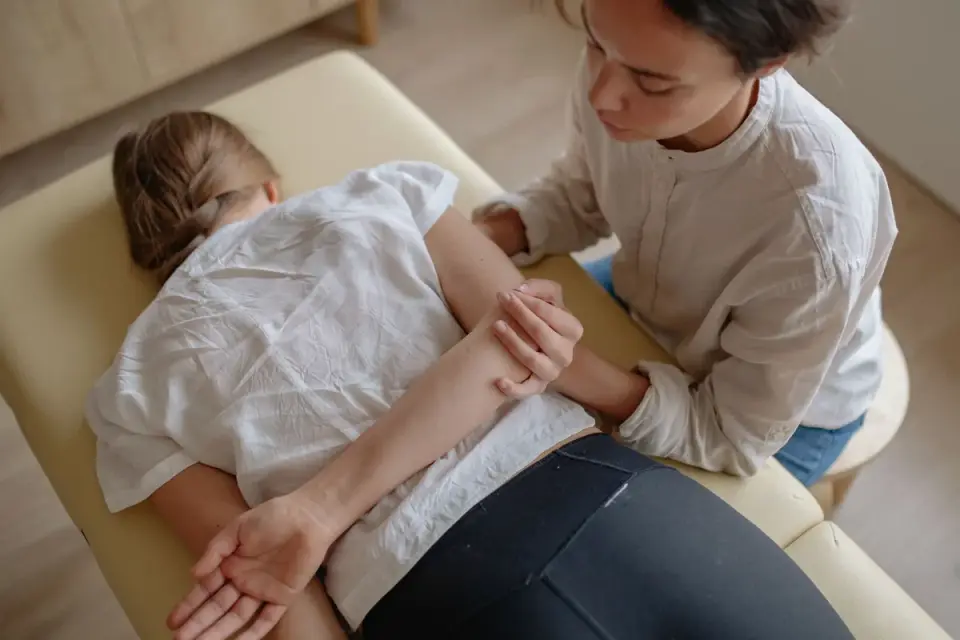
What actually slows it down: protein and load, not a pill
Diet comes first, and it’s not subtle. Older dogs generally need more protein per pound of body weight to maintain lean mass, not less — the outdated idea of routinely restricting protein in seniors has been walked back by most veterinary nutritionists I know, myself included, absent a specific kidney diagnosis that calls for it. Pair that with regular resistance-style movement: stairs, hills, sit-to-stand repetitions, swimming if the dog tolerates it. Muscle responds to mechanical load. A daily flat walk on a treadmill helps cardiovascular fitness and joint mobility, but it doesn’t recruit muscle the way an incline or a set of controlled stairs does — which is worth reading more on in our piece on core-strengthening exercises for dogs and, for dogs who’ve started to hesitate on stairs or refuse a walk altogether, why some dogs stop and refuse to walk.
Here’s the short version I give owners: food and load-bearing exercise are the intervention. Supplements are, at most, a supporting player.
That’s where I want to be precise instead of dismissive, because this is a joint-supplement publication and I don’t get to wave the category away. Joint pain is one of the biggest reasons an arthritic senior dog stops using a limb normally, and disuse is a fast track to muscle atrophy — a dog that won’t load a sore hip will lose muscle over that hip within weeks. So a joint ingredient that genuinely reduces discomfort and gets a dog moving again is doing indirect work for muscle preservation, even though it isn’t a muscle-building ingredient itself. Chondroitin and glucosamine are among the most studied joint-support ingredients for dogs, and chondroitin has been shown to support healthy synovial fluid homeostasis, per a 2026 study in Frontiers in Veterinary Science. Glucosamine HCl, separately, has been shown to help prevent experimentally induced cartilage degradation in vitro, according to a review published in the Journal of Veterinary Medical Science. Green-lipped mussel powder, a common third ingredient in joint blends, alleviated paw swelling and reduced markers of inflammation including TNF-α and IL-17 in a 2026 study in Nutrients — animal-model evidence, not a dog trial, and worth holding at that weight.
One of the owners I see most often for this exact combination — visible muscle loss plus a limp — was managing a 12-year-old Golden Retriever, 74 pounds, who’d gone from bounding up two porch steps to needing a running start by late winter. We worked on three things at once: a protein bump within her kidney-normal bloodwork, a switch from a single long flat walk to two shorter walks with a gentle incline, and a joint supplement to address the discomfort keeping her from loading that hind end. By early spring she was taking the steps again without the running start. I can’t tell you which of the three mattered most for her — that’s the honest limit of a single case — but the sequencing was deliberate: address the pain that’s suppressing movement, then let the movement do the muscle work.
Where I land, and the case against me
The counterargument I take seriously: if a joint supplement doesn’t build muscle, and protein plus exercise is the actual lever, why include it in a muscle-loss conversation at all? That’s a fair challenge, and I’d concede it if pain-free movement weren’t so tightly coupled to muscle retention in arthritic seniors. Weighing what a supplement can realistically do for diet, mobility, and recovery is the whole exercise here — it’s not a muscle-builder, and I won’t call it one, but comfort that restores normal loading of a joint is a legitimate, evidence-bounded reason to include it in a muscle-preservation plan for a dog whose limp came first. If your dog’s limp came first and the muscle loss followed, address the joint. If the muscle loss came first with no lameness, look at diet and total activity before you look at a supplement shelf. For dogs who’ve lost confidence on uneven ground rather than flat ground specifically, our guide to balance and proprioception exercises is a useful next stop, and for owners unsure how much walking is even appropriate at this stage, see how long a senior dog’s walk should be.
What I won’t do is promise a supplement will rebuild muscle a dog has already lost — no ingredient reverses sarcopenia on its own, and I’d be lying if I framed it that way. What I will say is that a dog moving comfortably, eating enough protein, and doing controlled resistance work most days is a dog with the best realistic shot at holding onto the muscle it has. That’s not a dramatic answer, but it’s the one I’ll still be giving five years from now.
Sources
- WSAVA Nutritional Assessment Guidelines 2011 — WSAVA
- Muscle Matters — Tufts Petfoodology
- Cachexia and Sarcopenia: Emerging Syndromes of Importance in Dogs and Cats — Journal of Veterinary Internal Medicine
- Chondroitin and synovial fluid homeostasis — Frontiers in Veterinary Science
- Glucosamine HCl and cartilage degradation — Journal of Veterinary Medical Science
- Green Lipped Mussel Powder and inflammatory markers — Nutrients