The kitchen clock said 6 a.m. and the Labrador at my feet was already awake, tail thumping against the cabinet. He was nine years old, 78 pounds, stiff from a cruciate strain, and under strict instructions for two weeks of lead-only rest. His owner looked at the leash in her hand and then at me, and asked the question I hear every month: does rest mean he can’t move at all, or does it mean we walk differently? We decided that morning to weigh what movement could realistically do for diet, mobility, and recovery, and to keep every step inside what the surgeon prescribed. That decision — controlled motion instead of crate-only stillness — is what this guide is about.
Three days earlier that same dog had tried the opposite. Left alone in the yard for ten minutes while his owner took a phone call, by day 3 he’d sprinted the fence line, jumped off the deck step, and come back panting with that hind leg tucked. He weighed 78 pounds and he’d undone three quiet days in thirty seconds. The swelling came back, the evening walk was cancelled, and the owner felt guilty for trusting an open gate. That failed experiment is why I’m firm on this: on lead rest, off-leash “just to sniff” isn’t rest, and a long lead in an open field isn’t control. A six-foot leash, a harness, and your pace set the dose.
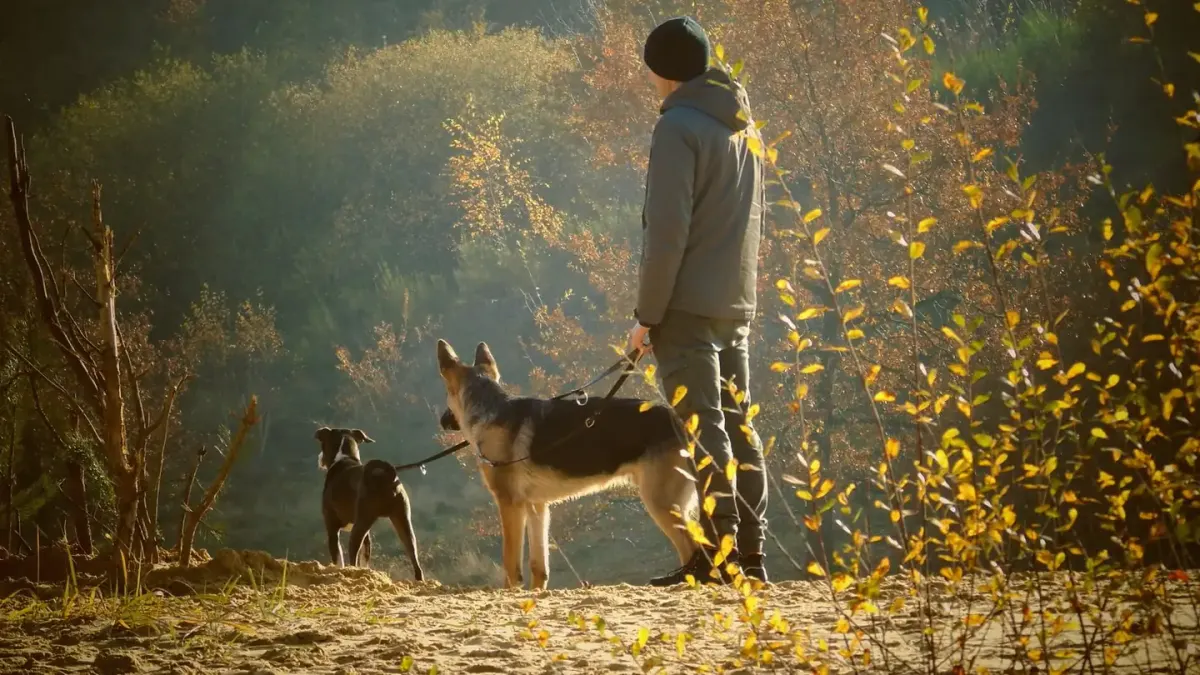
Lead rest means the dog stays on a short leash for every toilet break and every bit of fresh air, with no running, jumping, wrestling, or off-leash time. It’s commonly prescribed after sprains, back pain, post-surgical healing, or when the vet needs to limit joint loading while tissues calm down.
My verdict is direct: do several very short, slow leash walks a day, let the nose do the work, and stop before fatigue shows.
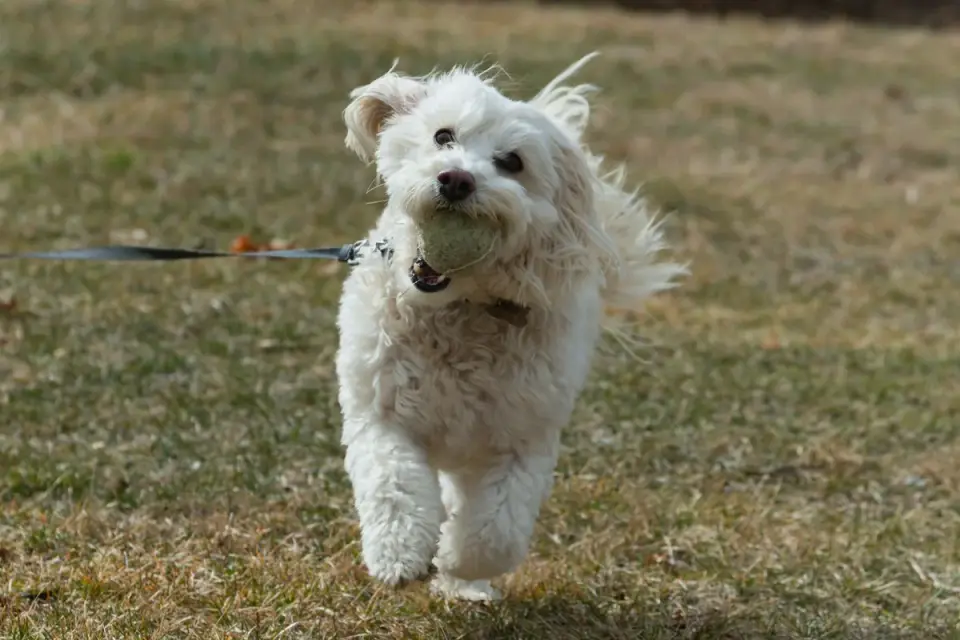
The first days look almost too quiet
In the first 48 to 72 hours, your job is circulation without irritation. Think three to five toilet walks of three to five minutes on flat ground, same route, same slow pace. Keep the leash short enough that the dog walks beside you, not ahead. Allow sniff stops — nose work tires a dog without loading joints — but don’t allow pulling, lunging, or stair sprints. Carry small treats to reward check-ins and loose-leash position.
Watch the details a lab bench would catch. Foot placement, head bob, willingness to turn both ways, breathing rate after you’re home. If lameness looks worse during the walk or the dog still hasn’t settled by 30 minutes after, that session was too much and the next one should be shorter. If you’re managing a back case, review Exercise and Rehab Basics After IVDD or a Back Injury with your vet before you add anything beyond toilet walks.
Nutrition still matters while activity drops. From a food-therapy and supplement-science view, I weigh what a supplement can realistically do for a dog’s diet, mobility, and recovery, and I ground that in nutritional evidence rather than promises. Glucosamine and chondroitin are among the most studied joint-support ingredients, and research in Frontiers in Veterinary Science described chondroitin in terms of “supports healthy synovial fluid homeostasis.” That may help support whole-patient joint health during layup, alongside a weight-steady diet.
Adjust meals down slightly if intake stays the same and output falls, because even a pound or two gained during rest makes sore joints work harder.
The middle weeks add minutes, not miles
By the second week many dogs look better and owners want to double the walk. Don’t.
Add time in small steps — for example, from five minutes to seven or eight, then hold that level for two to three days before you add again. Keep surfaces forgiving: short grass, packed dirt, dry pavement. Avoid hills, deep sand, slick floors, and fetch. One controlled walk with clean footfalls beats three sloppy ones.
This is where the strongest counterargument shows up: that strict rest wastes muscle and a dog should push through stiffness. There’s truth inside it — prolonged immobility does cost conditioning — yet pushing through lameness during a prescribed rest window risks re-injury and a longer layoff. I still land on conservative progression because you can rebuild muscle later, while a re-torn ligament or angry disc resets the clock to zero.
Midway through, a different trap appears. A seven-year-old, 54-pound cattle dog mix I followed was three weeks in for iliopsoas strain and moving well on five-minute loops. Her owner, encouraged, drove her to a cold lakeside trail at dawn and let her wade and scramble over rocks for twenty minutes. By that evening she was short-striding on the right hind again and sore to rise the next morning. Cold, uneven footing and an unplanned jump load added up faster than fitness did. We went back to flat, warm-up walks near home, and for winter cases I now point owners to How to Exercise a Dog in Cold Weather Without Wrecking Their Joints before they improvise outdoors.
Supportive nutrition talk belongs here too, stated carefully. Laboratory work summarized in the Journal of Veterinary Medical Science found glucosamine “prevent experimentally induced cartilage degradation in vitro,” and a review in Nutrients noted that marine oils “BMO, GMO, and KO all alleviated paw swelling in rats and reduced serum levels of rheumatoid factor (RF), anti-cyclic citrullinated peptide (anti-CCP) antibody, and pro-inflammatory cytokines such as TNF-α and IL-17.” Those findings may help support our understanding of joint nutrition, though rats and cell models aren’t dogs on leashes.
Stop a walk for non-negotiables: toe dragging, sudden yelp, refusal to bear weight, heavy panting that doesn’t ease, or swelling that’s new.
The final stretch tests your patience most
The last days of lead rest fool people. The dog looks normal in the living room and begs for the old routine.
Keep the leash on until the vet clears you off it.
Use the final recheck as your decision point, not the dog’s enthusiasm. Bring notes: minutes per walk, number of walks, any skipped sessions, sleep quality, stair ability, morning stiffness in minutes. Ask specifically what’s allowed next — longer walks, gentle inclines, or referral to rehab — and what still isn’t. If weight crept up during rest, plan the rebuild with How to Gradually Increase a Dog’s Exercise for Weight Loss rather than jumping back to full mileage.
An edge case worth naming: the senior dog who gets anxious and vocal on strict rest. An 11-year-old, 42-pound spaniel with arthritis and separation distress panted and paced when confined to one room between walks by day 10, and his morning stiffness actually looked worse after restless nights. His vet kept the leash rule but widened the world — same short walks plus two extra two-minute sniff outings, meals scattered on a snuffle mat, and a mattress moved to the busiest room so rest felt social. The observable marker that changed was sleep: four settled hours overnight instead of ninety restless minutes. For that dog, mental load had to drop before the body could use the physical rest.
Boredom is real, so rotate low-arousal enrichment that keeps four paws on the floor. Sniff games in grass, lick mats, slow scatter feeding on a rug, five minutes of name-response or chin-rest practice. Skip tug, wrestling, and anything with jumping or sharp turns.
You’ll know the plan worked when walks stay clean, recovery after walks stays short, and the vet can see a calm, steady dog — not a pent-up one exploding off rest.
Frequently asked questions
How long should each walk be on lead rest?
Start with 3 to 5 minutes for toilet breaks, then add 1 to 2 minutes every few days only if lameness does not worsen during or after the walk and your vet approves.
Can my dog sniff and play during lead rest?
Sniffing on a short leash is encouraged because it provides mental exercise without joint loading. Avoid play, running, jumping, fetch, tug, and off-leash time until cleared.
When should I call the vet during lead rest?
Call for worsening lameness, new swelling, vocalizing in pain, refusal to bear weight, toe dragging, or panting and restlessness that do not settle within about 30 minutes after a walk.
Sources
- Chondroitin and synovial homeostasis study — Frontiers in Veterinary Science
- Glucosamine and cartilage degradation review — Journal of Veterinary Medical Science
- Marine oils and joint inflammation review — Nutrients