On this page
You just clipped the leash on, loaded up, and now your dog is shaking in the back seat. A 6-year-old 68-pound Lab who was sprinting retrieves ten minutes ago is curled on the seat cover, muscles rippling under a damp coat, breathing a little fast while you wonder if you pushed too far. I see this exact car-ride moment after weekend hikes and field sessions, and my position is clear: treat post-exercise shivering as a recovery signal until you prove otherwise, not as normal tiredness.
Check temperature and comfort first, pain and exertion second, and nutrition support third. That order matters because a cold, wet dog needs warmth now, while joint nutrition matters over weeks.
Stop the car check: warm, water, and watch for 10 minutes
Pull over or park, kill the AC, and do this in order. Dry the chest and belly with a towel you keep in the car. Offer room-temperature water, not ice water. Feel ears and paws for cold, look at gum color, and watch breathing rate at rest.
Do these steps before you drive home. Keep the car 68-72°F, crack a window for air, and put a blanket under — not over — a panting dog so heat can dissipate. If shivering stops within 10-15 minutes of warming and resting, and the dog is bright, responsive, and willing to walk a few steps, that points toward chill, excitement comedown, or mild fatigue.
Call your veterinarian the same day if shivering lasts past 30 minutes at rest, if the dog will not stand, vomits, has pale or brick-red gums, collapses, shows a swollen or painful limb, or if rectal temperature is below 99°F or above 104°F. Those are not wait-and-see signs.
Is this cold, pain, or too much exercise?
My rule from sports medicine: shivering after work is thermoregulation, muscle fatigue, or pain until proven otherwise. Cold is most common when a wet dog meets car AC, especially short-coated, lean, senior, or small dogs. Pain looks different — stiffness getting out of the car, licking one joint, yelping on stairs, or trembling concentrated in the hindquarters.
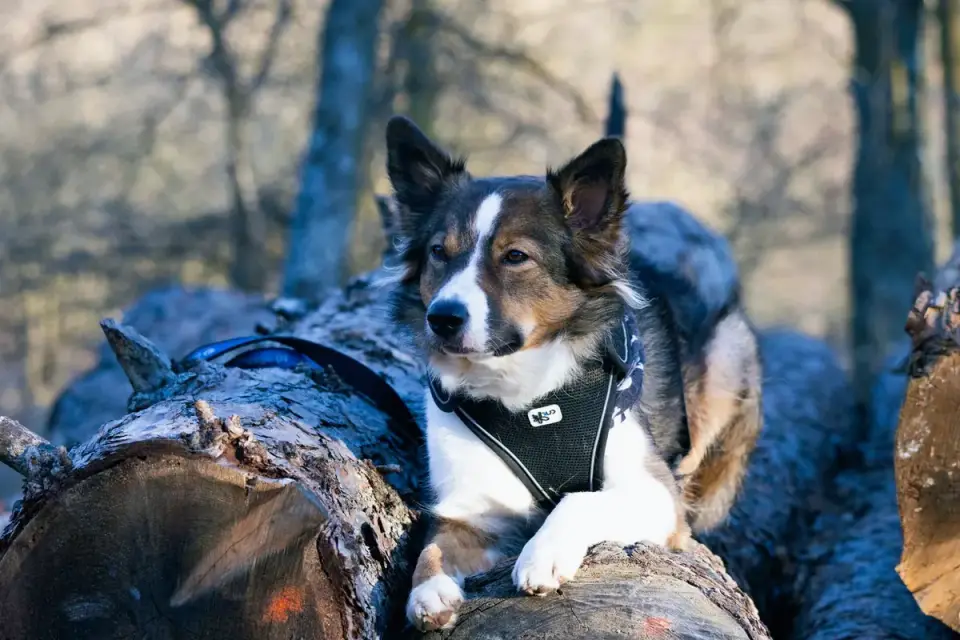
The failed approach I watch owners repeat is driving home with the AC blasting and assuming the dog will shake it off, then carrying a stiff dog up the porch steps an hour later. One composite case sticks with me: a 9-year-old 44-pound border collie mix after a damp 90-minute trail loop, shivering hard in a 62°F car with the vents on high. The owner kept driving, skipped water, and by day 3 the dog was short-striding on the left hind and reluctant to jump into the SUV. We had to cut exercise for two weeks and rebuild the walking base because the car ride hid early stiffness instead of revealing it.
Learn from that tradeoff. Use the ride home as an exam room. Note which leg the dog favors, whether rising is slow, whether panting stays rapid after 10 minutes, and whether excitement masks lameness. For help grading workload after time off, see Exercise and Rehab Basics After IVDD or a Back Injury and At-Home Physical Therapy for Dogs: What It Is and When You Need a Rehab Vet.
What joint nutrition can realistically do for recovery
Food, body condition, and training load drive recovery. Supplements may help support the joint environment around that base, and I ground that integrative claim in the nutritional evidence rather than promising a fix for shivering itself.
Glucosamine and chondroitin are among the most studied joint support ingredients for dogs, and the research lens is narrow and honest. Chondroitin research reports it “supports healthy synovial fluid homeostasis” in work published in Frontiers in Veterinary Science, which matters because synovial fluid is what bathes and lubricates the joint during repetitive motion. Glucosamine work is largely mechanistic — one review notes it “prevent experimentally induced cartilage degradation in vitro” according to the Journal of Veterinary Medical Science — so I read it as biological plausibility, not proof it will stop post-exercise trembling.
Green-lipped mussel adds a food-therapy angle I use often because it supplies omega-3 fatty acids and glycosaminoglycans that have been studied for joint support. The nutraceutical data are still early, mostly in models: one study in Nutrients found “BMO, GMO, and KO all alleviated paw swelling in rats and reduced serum levels of rheumatoid factor (RF), anti-cyclic citrullinated peptide (anti-CCP) antibody, and pro-inflammatory cytokines such as TNF-α and IL-17.” That does not translate directly to your dog, but it helps explain why mussel is formulated for mobility diets.
The strongest counterargument is fair: none of these ingredients treats acute shivering, pain, or overexertion in the car. I still include them for active dogs with recurring stiffness because the downside is low when the label dose, weight, and veterinary guidance align, and the upside is supporting joint flexibility and mobility across a season of work.
Build the ride-home routine that prevents the next episode
Here is the edge case owners miss: the fit young dog who only shivers after long stops. A 2-year-old 52-pound pointer mix I followed as a composite example would run hard for an hour, ride quietly, then shake for five minutes after a gas-station stop at week four of a new running program. By day 10 of logging it, the pattern was obvious — no warm-up, no cool-down, then a cold car and a full water bowl all at once. Splitting food and water, adding a 10-minute leash cool-down, and adjusting the plan using ideas from How Much Exercise Does a Puppy Need by Age? and How to Gradually Increase a Dog’s Exercise for Weight Loss stopped the cycle without changing the total mileage.
Copy that structure. Cool down 5-10 minutes on leash. Towel dry. Moderate water. Keep the car neutral, not cold. Log duration, temperature, surface, and recovery time so your vet sees trends, not one scary ride.
Brief recap: warm the dog first, screen for pain second, and let joint nutrition support the long base that makes the next ride home quiet.
Frequently asked questions
Should I wrap my shivering dog in blankets in the car?
Dry first, then keep the car neutral at 68-72°F. A blanket underneath helps; piling blankets over a panting, overheated dog can trap heat. If shivering persists past 30 minutes, seek veterinary advice.
Can overexercise cause shivering hours later at home?
Yes. Muscle fatigue and stiffness often peak 2-6 hours later. Watch for slow rising, short strides, reluctance on stairs, and localized trembling, and reduce the next workout while you assess recovery.
Do joint supplements stop post-exercise shivering?
No. They do not treat acute shivering or pain. Ingredients like glucosamine, chondroitin, and green-lipped mussel may help support the joint environment over time alongside weight control, warm-ups, and progressive training.
Sources
- Synovial fluid homeostasis study — Frontiers in Veterinary Science
- Cartilage degradation review — Journal of Veterinary Medical Science
- Mussel oil inflammation study — Nutrients