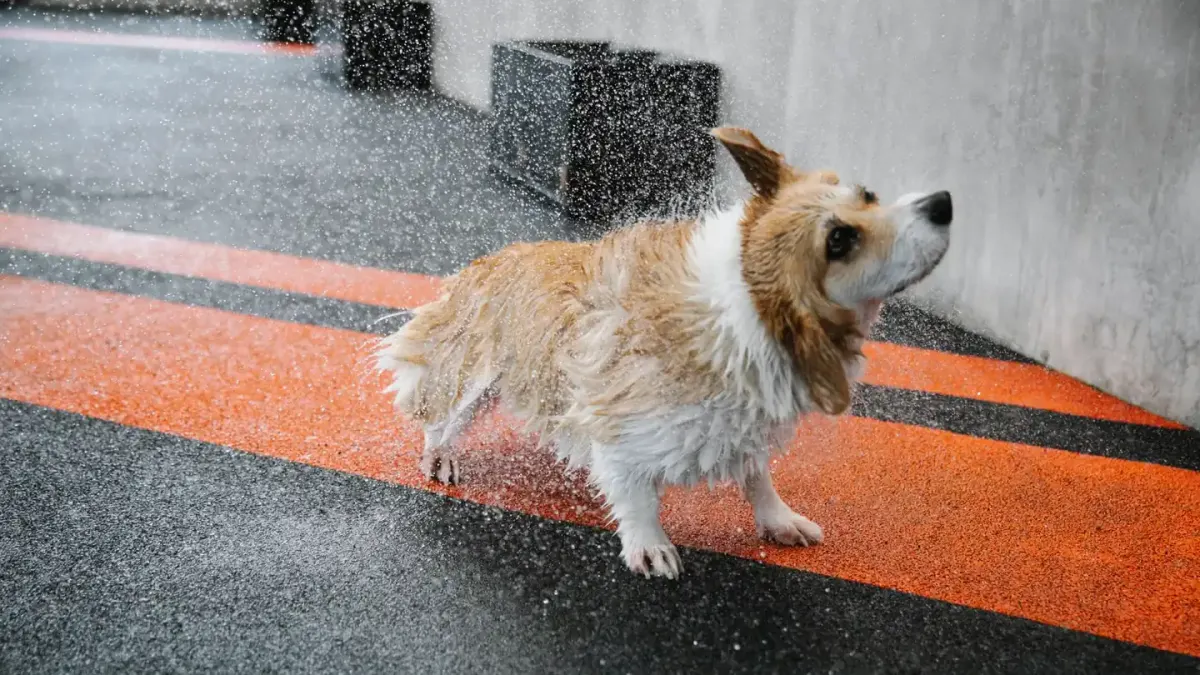
A 20-foot garden does not look like a gym until you watch a stiff dog try to turn at full speed on wet grass to chase a ball, then limp inside for the evening. That tight turn is the whole problem and the whole opportunity of a small space: you cannot build fitness with laps, but you can build consistency with footwork, posture, and pacing.
My position is direct: for a garden-only week, weigh what movement can realistically do for diet, mobility, and recovery, and prioritize frequent, low-impact loading over distance. A supplement may help support whole-patient joint nutrition, but it cannot replace graded activity, weight control, and non-slip footing. The strongest counterargument is that small gardens cause repetitive stress from tight turns and hard stops, which is true — and that is exactly why the plan below limits fetch, rotates surfaces, and splits work into short bouts.
The small-garden checklist I use first
- Map the space: measure length, note slopes, steps, slick patio, fence lines, and shade.
- Fix traction first: add an outdoor rug or rubber mats on turns, keep nails trimmed, wipe wet paws.
- Split the dose: 2-3 sessions of 8-15 minutes beats one 40-minute session for stiff dogs.
- Rotate the job daily: sniff walk, strength, balance, mobility, rest — not fetch every day.
- Score recovery: morning stiffness, lagging on stairs, panting that lasts >10 minutes means shorten next day.
- Feed for the work: weigh food for ideal body condition, and ground any joint ingredient in nutritional evidence for what it may help support.
- Plan the exit: know when soreness needs rest versus a veterinary exam for lameness >24-48 hours.
That checklist is the filter for everything below. If footing or recovery fails, cut volume before you add variety.
Three weeks in, I worked through this with an owner of a 9-year-old, 62-pound Labrador mix living in a townhouse with a 15-by-25-foot patio garden. She wanted a single long evening play to tire him out, because mornings were rushed and he barked when bored. By day 10 on that pattern he was slow to rise, bunny-hopped the two back steps, and quit his perimeter patrol halfway around. We made the main decision concrete: we kept the same garden but divided the same 25 minutes into a 10-minute morning sniff circuit and a 12-minute evening strength circuit, with no thrown ball. His morning rise time shortened and he resumed the full patrol loop without sitting, which told us frequency mattered more than fatigue.
Anchor the week to recovery, not to mileage
A small garden punishes the weekend-warrior pattern. Two big chase sessions load the same tendons and cartilage with deceleration, while five easy days do nothing. For background on why that spike matters, read Weekend Warrior Syndrome: Why Weekend-Only Exercise Hurts Dogs and use it to cap sprinting in tight space.
Glucosamine and chondroitin are among the most studied joint support ingredients for dogs, and that literature is useful for setting expectations. Chondroitin research described in Frontiers in Veterinary Science reports that chondroitin “supports healthy synovial fluid homeostasis,” which fits a garden plan built around steady, lubricating movement rather than impact. Laboratory work summarized in the Journal of Veterinary Medical Science found glucosamine HCl to “prevent experimentally induced cartilage degradation in vitro,” which is mechanistic support, not proof of pain relief on your patio. Green-lipped mussel work in Nutrients noted that “BMO, GMO, and KO all alleviated paw swelling in rats and reduced serum levels of rheumatoid factor (RF), anti-cyclic citrullinated peptide (anti-CCP) antibody, and pro-inflammatory cytokines such as TNF-α and IL-17.”
That evidence grounds an integrative claim without overstating it: food therapy plus consistent motion may help support mobility and recovery, but dose, body weight, and rest still decide the outcome.
We learned the tradeoff the hard way the second week. The owner tried to replace walks with 15 minutes of tight figure-eight retrieves around two planters because the 62-pound dog loved it and it was efficient. By day 4 he was plantigrade on the turn, scuffed a carpal, and refused the evening session he had liked before. The failed approach was chasing tiredness with turns. We swapped retrieves for straight-line shuttles down the longest edge, 20-30 feet, walk back, treat at each end, plus three sit-to-stands on matting. Same garden, same time, less braking load, and his willingness returned within two evenings.
What a garden-only week actually looks like
Think in jobs, not minutes alone. Puppies and seniors scale very differently, so calibrate age and growth risk with How Much Exercise Does a Puppy Need by Age?.
Monday — Sniff circuit: 10-15 minutes perimeter walking on leash, pauses every 10 feet for sniffing, one slow lap each direction. Good for warm-up and mental fatigue.
Tuesday — Hind-end strength: 8-12 minutes. 4-6 sit-to-stands on grip surface, 3 short straight shuttles, 2 minutes of weight shifting while standing on a mat. Rest 60 seconds between sets.
Wednesday — Active recovery: 10 minutes scatter feeding in grass, gentle range-of-motion if your veterinarian showed you how, no stairs for reps.

Thursday — Balance and footing: 8-10 minutes cavaletti from broom handles on low blocks, step-overs down the straight edge, stand on a couch cushion for 10-20 seconds x 3. Skip if the dog knuckles or panics.
Friday — Sniff + strength combo: 12-15 minutes, half Monday, half Tuesday at lower reps.
Saturday — Enrichment walk off-property if possible, otherwise novel garden course: new scent boxes, changed obstacle order, 15 minutes maximum.
Sunday — Full rest or 8-minute leash stroll. Log stiffness that morning.
Dogs that share the space need split turns to avoid collisions and guarding at corners, a point covered well in How to Exercise Multiple Dogs at Once (Without Wrecking a Joint).
Keep surfaces boring on purpose.
The edge case that changed my template was a 4-year-old, 18-pound terrier mix in a walled 12-by-12-foot courtyard with three entry steps and no straight run longer than 12 feet. Straight shuttles were impossible without a hard stop, and by week two she started vaulting the bottom step to start the game faster, landing stiff on front legs. We stopped all step reps, laid a 10-foot runner as the only work lane, and moved strength to static work: 5-second stands, cookie stretches to hip and shoulder, and slow backing 6 feet down the runner. Her step-vaulting stopped once the game no longer started at the stairs, and her owner could finally hear the difference between excitement panting and end-of-session fatigue in that tiny echoing space.
When to shorten, split, or call the clinic
Shorten the next session by half if you see lagging behind, sitting mid-circuit, lip-licking with yawning, or stiffness the next morning. Split into two micro-sessions if the dog starts strong but fades at minute eight. Skip impact for 48 hours after any slip, yelp, or non-weight-bearing step.
For dogs coming back from a neurologic episode, do not improvise stairs or balance work; use Exercise and Rehab Basics After IVDD or a Back Injury as your boundary and get a rehab veterinarian to clear progression.
Your next step is practical: lay matting on the turn zone tonight, write Monday through Sunday on an index card, and track rise time and willingness for seven days before you add a single minute.
Frequently asked questions
Can a small garden alone keep a dog fit?
It can maintain mobility and muscle if you use short daily sessions for sniffing, strength, and balance, control weight, and avoid repetitive sprint-turns. It cannot replace longer aerobic walks for most adult dogs.
How long should each garden session be?
Start with 8-15 minutes, 1-2 times daily, with rest between sets. Extend only if next-morning stiffness and willingness stay normal.
Is fetch okay in a small garden?
Limit it. Tight turns and hard stops raise strain risk. Prefer straight-line shuttles, sit-to-stands, and nose work in confined space.
Sources
- Chondroitin and synovial homeostasis in dogs — Frontiers in Veterinary Science
- Glucosamine and cartilage degradation in vitro — Journal of Veterinary Medical Science
- Marine oil blends and inflammatory markers in rats — Nutrients